Pawlet-based artists EveNSteve are excited to announce open studio hours on Halloween weekend, Saturday Nov. 1, from 2 to 4 PM.
On display will be our two most recent bodies of work. The first portfolio, “The Nothing There Is,” uses black and white imagery with cryptic symbology. Several of the works in the series are featured in the current issue of Art New England Magazine. The second portfolio is a new unnamed body of work that celebrates vibrant color and unusual voices.
EveNSteve is the creative team of artist Stephen Schaub and author Eve O. Schaub. Their artworks combine imagery with handwritten text to create evocative landscapes that tell stories and speak to history. They also create award-winning experimental short films detailing their artworks and their art-making process.
EveNSteve’s studio is located at 671 River Road in Pawlet Vermont. To learn more visit EveNSteve.com or @EveNSteveartists on IG.
Digital Should Be Digital: A Reflection on 20+ Years of Film Emulation
For more than two decades, digital photographers have chased the elusive goal of replicating the look of film. From plugins to presets to painstaking editing workflows, we’ve tried to coax analog soul from digital precision. But after years of exploring both mediums—most recently through tests comparing modern cameras like the Leica M11P and Ricoh GR3 to grainy Tri-X—I’m starting to feel like maybe it’s time to stop chasing.
Maybe digital should just be digital.
The problem, as I see it, is this: today’s digital files are just too good. They’re packed with information, ultra-sharp, and astonishingly clean. When we try to throw a grain overlay on top of that, it often feels like swimming against the current. The grain doesn’t integrate—it sits on top, more of a costume than a character. In many cases, it feels counterproductive.
There was a time when everyone wanted the convenience of digital with the aesthetic of film. That made sense in the early 2000s when sensors were still finding their footing. But that ship has sailed. Digital now stands strong on its own. It excels at high resolution, incredible detail, impressive ISO performance, and immediacy. These are not flaws to be masked—they’re strengths to be embraced.
I know there are many photographers who use film emulations because they like the way it makes their images look. And if you’re one of those people—great. I’m not telling you not to use them. I’m just saying you’re not really emulating a film—you’re emulating a style. And a style that’s only loosely based on the original. The reality is, unless you’ve actually worked with a specific film stock or have true reference samples pulled up beside your digital image, it’s hard to know just how accurate those emulations are. In most cases, from my experience, they’re far more dramatic than the original films ever were: more saturated, more contrasty, grainier. So instead of thinking of them as accurate replicas of film stocks, think of them more like filters—a look you’re applying to suit your creative vision. Nothing wrong with that at all, just let’s call it what it is.
It’s also important to remember that back when digital photography first began, camera manufacturers were working very hard to convince film photographers to make the leap into digital. One of the easiest strategies was to promise that digital had “film-like qualities,” or to support third-party emulation software to help ease that transition visually. But emulation wasn’t only about replicating a filmic look—it had technical utility too.
Early digital cameras had lower bit depth, smaller sensors, and more limited tonal range. In that context, adding grain—either in-camera or in post—helped smooth out tonal transitions in images. Grain acted like a visual glue, bridging abrupt shifts in brightness or color and hiding early digital’s weaknesses. It was even more important in printing. At that time, inkjet printers were far less advanced: fewer ink channels, less refined screening software, and rougher tonal rendering. Adding a small amount of digital grain—even imperceptible to the viewer—could help prevent posterization and create a print that simply looked better. In those early years, emulation was as much about function as it was about style.
But today? The story is different.
The reality is, in 2025, we are blessed with so many amazing films still being made. I keep telling people—this is the golden era of analog photography. Yes, film is expensive, but the fact that Tri-X, XX, Cinestill, Ektar, and so many others are still available is incredible. If you’re after the look of Tri-X, and you can, just shoot Tri-X. What a gift to have that option. If you’re curious about the look of a specific stock—shoot it. We’re living in a time when these materials are still here and usable.
Now, I get it: not everyone has the luxury of time or budget. There are tight client deadlines, fast-paced shoots, art directors who want real-time previews, and turnaround demands that make digital not just convenient but essential. If you’re working in those conditions and want a “film look,” emulation might be your only viable tool—and that’s fine.
But if you’re going to emulate film, it’s important to understand that most of the software out there is tuned to be dramatic. The colors are pushed, the contrast is high, the grain is exaggerated. It’s film-as-style, not film-as-truth. That’s not necessarily bad—but it does place the responsibility back on the artist. If you want to emulate film authentically, take the time to study real film. Look at scans. Shoot some rolls when you can. Learn the nuance. Learn the subtlety. Because without that foundation, your emulation becomes a kind of fiction—a nice one, maybe, but a fiction all the same.
So Where Does That Leave Us as Hybrid Photographers?
I’ve long advocated for blending analog and digital technologies—it’s what led me to start the Figital Revolution. And nothing about this reflection changes that.
Saying digital should be digital and film should be film doesn’t mean the hybrid approach is obsolete. In fact, it frees us.
It frees us to fully embrace what digital brings to the table—its speed, clarity, and resolution—and to let analog keep its seat at that same table. And if you still want to mix them, that’s completely valid.
But I do believe we’ve entered a new era: digital now has its own look. Its own feel. Its own expressive language. Trying to bend it into film’s shape may actually work against the very qualities that make digital so powerful in the first place.
Why Choose When You Can Create Freely?
What I’ve always loved is that we don’t have to choose. Digital and film aren’t enemies. They’re tools in an expanding toolbox.
When I need immediacy or want a hyper-clean aesthetic, I reach for modern digital gear. When I want grit, mood, or a sense of texture breaking apart at the edges, I grab a Minox spy camera or load grainy 110 or 35mm film.
As artists in 2025, we are incredibly lucky. We have choices. And maybe the real evolution in image-making isn’t about making one format imitate the other—it’s about recognizing what each does well and using that to our advantage.
So here’s where I’ve landed:
Let digital be digital. Let film be film. And let art be whatever it needs to be.
Take 5 minutes and do this survey now! I have contacted Ferrania and hope to be involved with this project in some way… I have lots of info and thoughts to share. If anyone knows people at Ferrania please send them my way.
Click on the audio logo to listen to a brief rant on the future of film scanners… Part 2!! As mentioned in the audio, contact Kodak and let them know you want your $500 dedicated film scanner now! Also, if you went to a photographic institution- such as RIT (Rochester Institue of Technology) or SCAD (Savannah School of Art and Design)- please send this information to them as well… this directly effects the choices their students will have as working photographers.
If you can, do both!…let your voice be heard!… remember it is our medium! Please reference this article and the $500 dedicated film scanner in both your tweets and in your emails… pass this along to as many photographers as you know…if you get it as a tweet… retweet it and pass it on!
Click on the Inside Analog Photo LOGO to listen to an interview with yours truly on stop your crying and start your buying.
Interview by:
Scott Sheppard
Executive Producer/Anchor
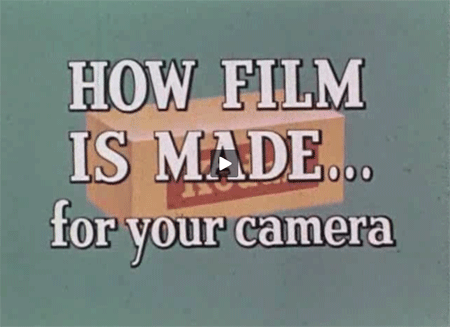
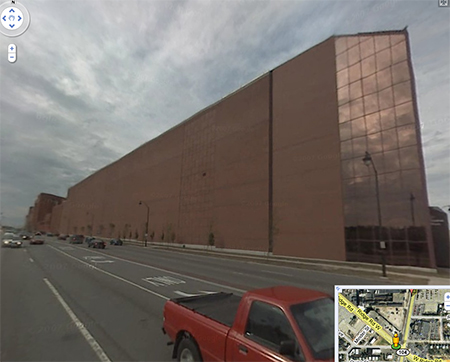
Click on the Audio Blog logo to listen to a 5 minute discussion on film production today at Kodak and how it has changed from the above video from 1958 “How Film Is Made… for your camera“. The audio references my recent trip to Eastman Kodak and a white light tour of Bldg. 38 where all films made by Kodak are produced from Ektar to TX to motion picture. The video below is of our group getting ready for the tour.
Click on the Inside Analog Photo icon to listen to a 37 minute interview of yours truly on a wide range of topics including: film, scanning, printing, and thoughts on the hybrid workflow. Interview is by Scott Sheppard, Executive Producer/ Anchor Inside Analog Photo.
You can also download the podcast at itunes… here is the direct link:





 Figital Revolution