Thought for the Day.

Abe“The best way to predict your future is to create it.”

                                –  Abraham Lincoln

This is a key underlying concept of the Figital Revolution…if we as photogrpahers band together and speak out about what we want in our industry, the industry will be compelled to listen! So over the next few months I will be conducting brief surveys (3 yes or no questions each) on what the photographic community really wants. So click on the survey link and and make your voice heard! I will post the results on The Figital Revolution and also use this information in meetings with industry (aka The Photo Industrial Complex) to illustrate what Real Photographers- that’s you- want! Please note you must enter your email address at the end of the survey to keep voting honest… please only VOTE once… it’s how Lincoln would have wanted it.

Link To Survey!

 Via La Revolution – Stephen Schaub

Please note that by completing this survey your email address will NOT be shared and you will NOT be added to any email mailing list. If you would to receive our online newsletter just click here to subscribe as it is FREE!

The New Kodak TMAX 400 (TMY-2) – Pushed to 1600, Processed in XTOL!

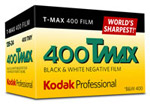
New Tmax 400 Box

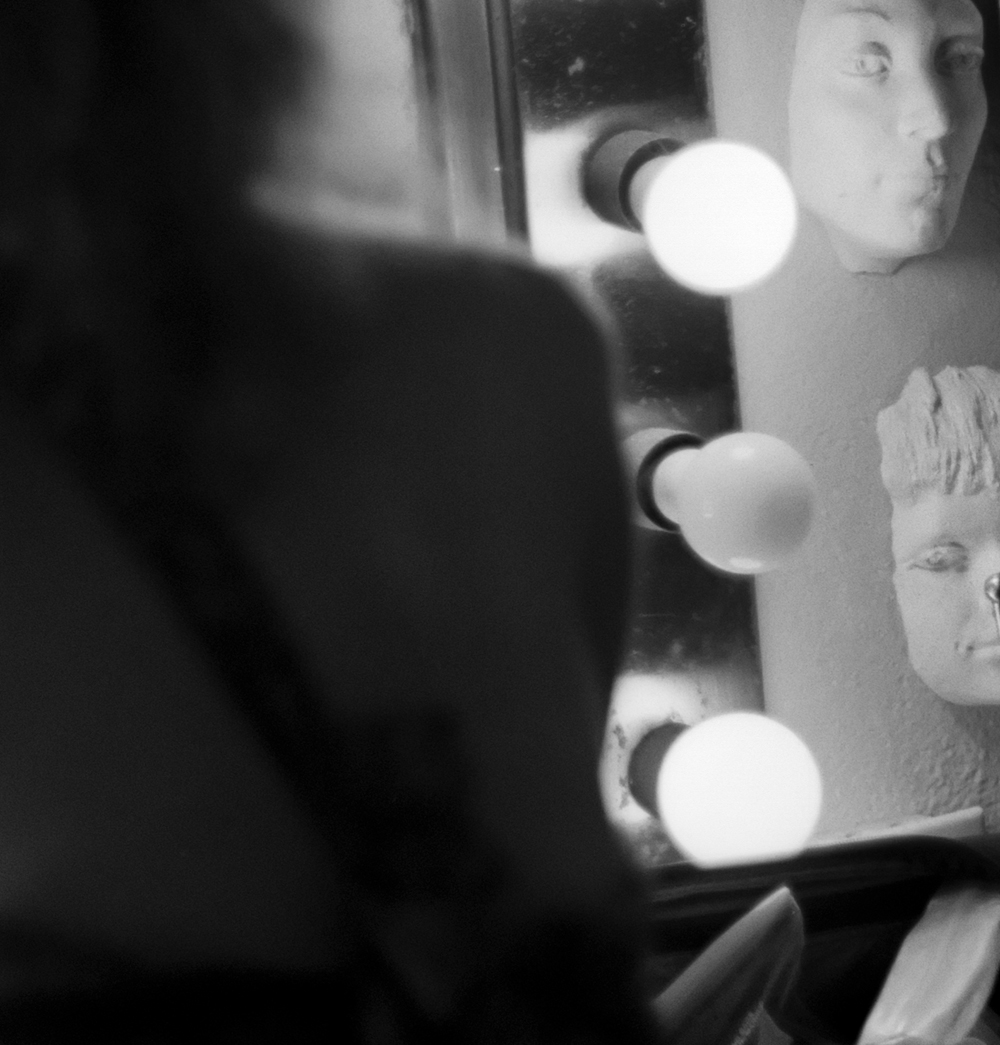
As promised here is a sample image (my wife Eve Ogden Schaub of Life=Art) in Puerto Rico pushing the new TMY-2 (Tmax 400) to an E.I. of 1600 and processed in Xtol Straight using Kodak’s suggested time/ temp . The light was very, very low as even at an E.I. of 1600 my exposure was still 1/8 at F1.4 (hand-held.) The image was made with a Leica M7 with a 50mm Summilux.

So what are my thoughts????

EveFull_1600EveDetail_1_1600EveDetail_2_1600

Please note: click on the thumbnails for a larger view.

1. Of course there is more grain than the 400 speed test I posted a few days ago (click here) but not a lot considering this is a 2 stop push! It is not as crisp and lacks some fine image detail as the other test image had due to the increased grain and I am sure the slow shutter speed and the f1.4 working f stop ( I do the best I can, but on 10 shots of espresso a day what do you expect?)

2. Good shadow detail and the highlights still have nice separation especially considering the light source.

3. Easy to scan- no problems with excessive contrast or anything…the scan was as easy as my last test scan. (Scanned on an Imacon Scanner at 3200 dpi, 16 Bit, wet mount, no sharpening.)

So what does this mean??? Where do we (I) go from here?

Well I for one will shoot this film as my NEW primary film at box speed (400) – but it is nice to know that in a pinch I can push this film to meet my needs no matter what they are… I am going to continue my exploration of different developers (stay tuned!!) for this film, but for now- Xtol works fine. Once again in my opinion – Kudos to Kodak! (It’s been a long while since I’ve been able to say that twice in one week!)

Image Copyright Stephen M. Schaub 2008

The New Kodak TMAX 400 Film – GET EXCITED KODAK IS BACK!!

New Tmax 400 Box

Kodak IMHO hit a home run with the new TMAX 400. I’ve been testing the 35mm version- (the box says world’s sharpest 400… and it is!) and having now shot around 30 rolls of this film in Puerto Rico and tested a few more here in Vermont here are some initial thoughts (note- please be sure to click on the images to get a larger view):

1. I tried 3 different developers (D-76, XTOL and PMK… XTOL Straight wins hands down.)

2. True 400 speed in XTOL.

3. Extremely fine grain with a very, very nice tonality…MY NEW FAVORITE FILM!!!

4. I feel that the times posted by Kodak for this new film are pretty darn good- at least the Xtol processing time/ temp produces negs that scan perfectly.

Eve Full Frame

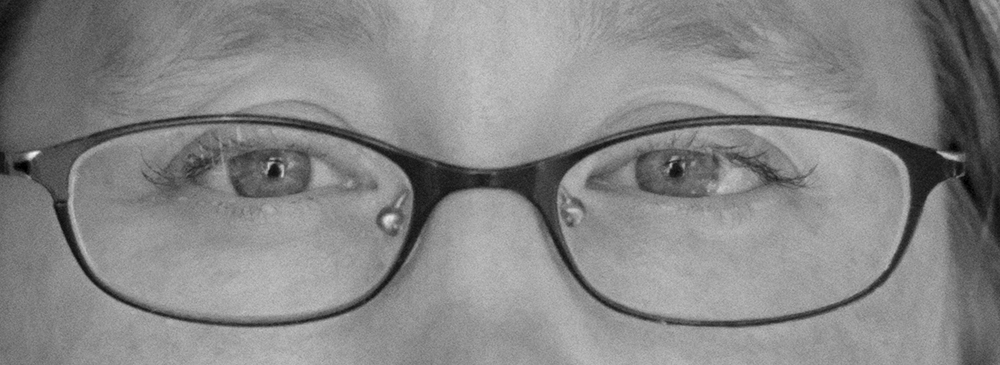
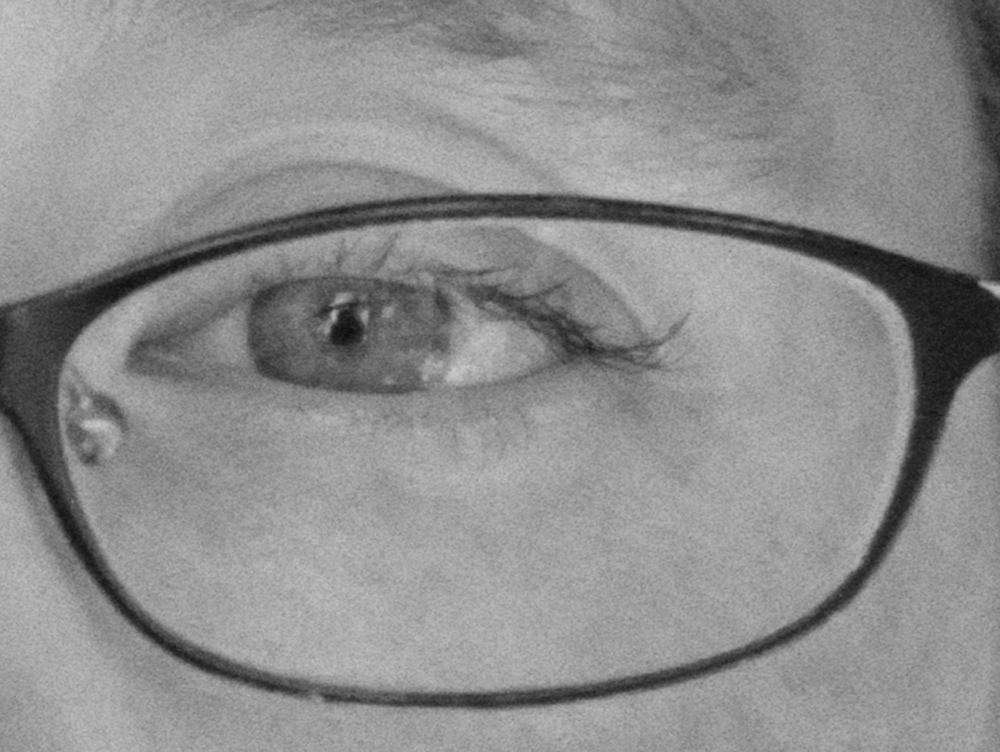
I have posted an example snapshot I took of my wife Eve Ogden Schaub of LIFE=ART while at lunch in Puerto Rico (my Pina Colada is just out of the frame). The image was shot on a Leica M7 with a Summilux 50mm F1.4 at F/2.8 (060 filter on lens). Be sure to check out the detail images as well as they really illustrate why I feel this film is a real winner (remember…this is 35mm 400 speed film!)

Eve EyesEve Right Eye Close UpOOF

The scan was done on our Imacon at 6300dpi, 16 Bit, Wet Mount. Printed at 16″ x 24″ on our d’Vinci Fine Art Printer it blows me away that this is 35mm. Go get this film NOW! This is a film we as photographers should support as it is fantastic (and how often can you say that these days?)

Please note that there is quite a bit of old stock TMAX 400 out there (I don’t like the old film at all)…the new version has only been out since Oct/ Nov 2007 and can be a bit hard to find. The box should have a red rectangle that says “World’s Sharpest !” The Catalog Number is: 894 7947…I purchased mine from a Calumet Store.

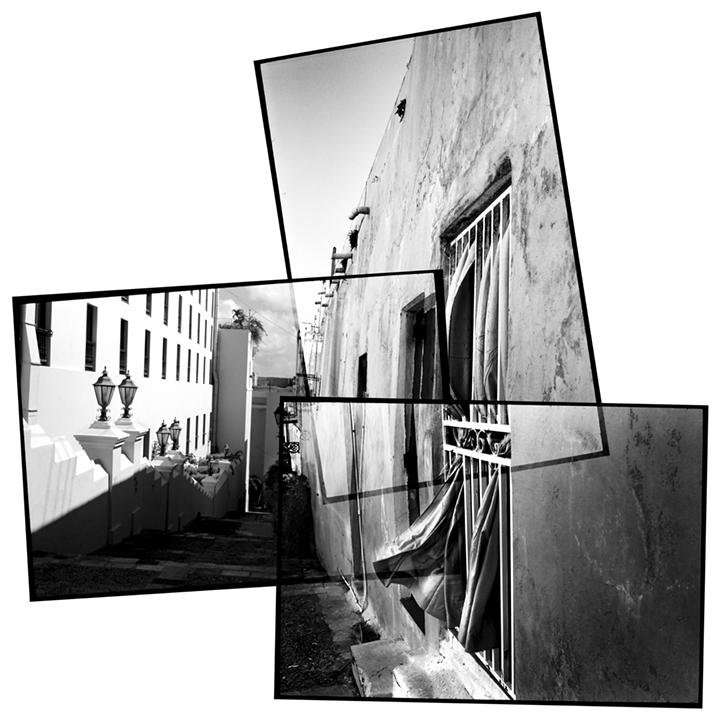
SanJuanCopyrightStephenMSchaub2008Here is a sample preview of my new artworks from Puerto Rico (These are from my Fragment Series). The image is 36″ x36″!

Viva La Revolution!!

Please note all images Copyright Stephen M. Schaub 2008

A Digital Point And Shoot Camera for Photographers?

sigma dp1 image

Rarely do I get excited about new cameras (let alone another digital point and shoot camera) introduced to our already-flooded medium, but a new offering by Sigma (DP1) needs to highlighted. I have been watching the development of this camera for over a year now and it seems that Sigma will now have it (DP1) out by Spring 2008…early Xmas anyone? For more information click here.

A Thanksgiving Message

Yes, it’s Thanksgiving 2007 which got me thinking about the last year and what I have to be thankful for (photographically speaking of course.)

1. Film is still being made (YEAH) and seems to be having something of a renaissance.
2. Only one new version of Photoshop to upgrade to in 07 ( I skipped it anyways).
3. No major upgrades required for hardware or software.
4. Most new papers sucked or were rebranded previous offerings so I saved on costly testing and re-testing.
5. Photo Expo Plus in NYC was so boring that very little caught my eye or pocket book (thank god!)
6. My Leica lenses are still king and the new Nikon and Canon offerings are so not for me…no thank you.
7. My printing platform (The d’Vinci Printer) will continue to rock in to 2008 and beyond so no thank you to Mr. Epson, Mr. Canon or Mrs. HP.

So when I stuff my pie hole on Turkey day with too much food and drink and congratulate my self on accomplishments both real and imaginary as a photographer and artist I can also thank the Photographic Industrial Complex for making 2007 one least inspiring technologically and one cheapest years I can remember…now that is something to be really thankful for!

It’s the Print That Matters

By Stephen M. Schaub

Morning Quickie…

I heard over and over needless concern from fine art photographers about which media to print on and which media is accepted by the industry and which is not. This disturbs me as we are talking about a work of ART and not something which can easily or should necessarly even fit into a neat category or process. If your work is printed on canvas, hand-made paper or Saran Wrap who cares as long as it is the correct media for your work. Collectors buy work based on what they love. Archival is nice but way overemphasized by photographers- brilliant color and deep blacks can be great but it depends on the work. If archival was king Pollock wouldn’t have sold a thing.

In the end it is your work, not a gallery’s or publisher’s or anyone else’s- it is up to you to decide how it is printed and displayed…let the Photo Industrial Complex and the ART world control this part of our medium and I think I’ll take up lawn mowing for a living.

It’s About More Than Pixels Guys!

I’ve got a bone to pick…(who me?) I am getting really tired of reading “reviews” about how much better the release of new “X” digital camera or capture back is than film. Recently I’ve been noticing that many of these “experts” are making claims that 4″x5″ film has now been beat or surpassed.

Excuse me, but- what? Do I really need to say it? It’s about more than pixels, guys!

This is, we should all be aware, an argument designed first and foremost to part you from your pocket book. As in: spend, spend, spend!

Consider this… in order to get a capture device that will equal high-end film scans from, say, a medium or large format camera, you are spending $30,000+ dollars on bleeding edge technology (whoops- is it the technology that’s bleeding… or is that us?). Furthermore, remember its life-span is about equal to that of an ant when compared with the legacy of film-based cameras. Realistically, unless you have clients willing to spend tons of money for your services (great for you) or you are just really rich there is NO WAY to get back your financial investment in this type of system before the camera industry trumps your purchase and convinces you that, once again, it’s time to upgrade, upgrade, upgrade! I’ve been down this road enough to know that it is very difficult indeed. These days, I personally prefer the upgrade expense of a new roll of film or sheet of film, it just seems a bit more sustainable. Call me crazy, but I’d rather spend my money on technology that is immediately meaningful such as a better monitor or of course more RAM.

Not to mention, it really is about more than pixels… seriously! There is an inherent “look” to everything: a great film scan, a great digital capture, and to the finished prints from both types of files…you have to choose which you like. That’s right! Despite what you’ve heard, each one is okay. Ultimately, the choice is up to YOU. I will confess here and now that the very high end digital capture systems do in many ways equal great film scans in terms of resolution (or get darn close) but it is different look, kind of like the difference between vanilla and French vanilla ice cream- you know, similar, but different. Bleeding edge digital capture has it’s definitive place on high-end advertising shoots and for situations where you need really fast turn-arounds, but that is a small section of the overall photography market.

Another technique of these “expert” reviewers is to compare something like ISO 100 film with 100 ISO on a digital back… we are lead to conclude that at the best of the best all things are equal or better for digital. I guess these experts want you to forget that most pro film lines are available in ISO’s like 64, 50, 32, 25 and even 15…stack that side by side with a digital capture. Hey- film has this option (or in digital terms “upgrade”). It’s interesting that when there are positives on the digital side reviewers point it out at every opportunity but when the shoe is on the other foot? Silence. The fact is that a low ISO hi-res film scan is impossible to beat with the current digital technology. But why point that out? After all, we have to move those new digital cameras somehow to make room for the next “technological breakthrough,” which at the current pace should be sometime around next Wednesday.

So, the choice is yours… but whatever you do, don’t buy into the BS “reviews” who fail to realize that different is good! Choice is good! Right now we need reviews more about working with a system day in and day out, the durability of the system long term… and YES have an honest, open discussion about how to make your personal choice and investment work. For if we can’t, photographers will just keep on bleeding at the local camera store until there is nothing left to bleed.