I Love Coffee: Caffenol C Developer Test 2

The sample images below are my second set of test shots processed using Caffenol C… the first image is Ilford FP4+ and the second is Fuji Acros… the Acros in my opinion is quite amazing! The Acros has the lowest fog level of any film I have tested so far (8 films and counting in Caffenol) and has a good usable range and very nice fine grain. The FP4+ was processed using the time posted on Digital Truth with very good success.

Ilford FP4+ Processed in Caffenol C
Fuji Acros Processed in Caffenol C

I’m not sure if it reads on the screen but in the Acros image there is very good detail in the left side dark region… both images were shot with my Leica MP with a 28mm lens at box speed. The Acros processing time and technique will be discussed later…

Viva la Revolution

I Love Coffee: Caffenol C Developer, Test 1

If coffee is good for me (and it is)…. it must be good for my film, right? I had heard about developing film in coffee back when I went to RIT but have never got around to trying it- until now.

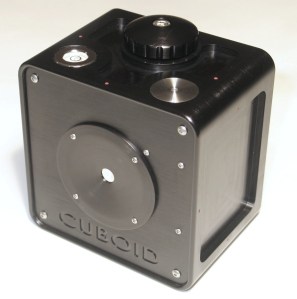
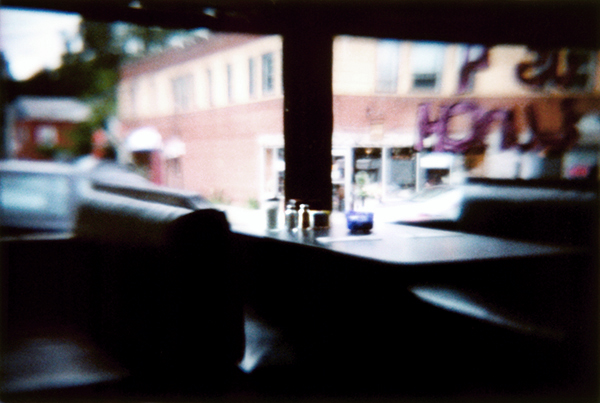
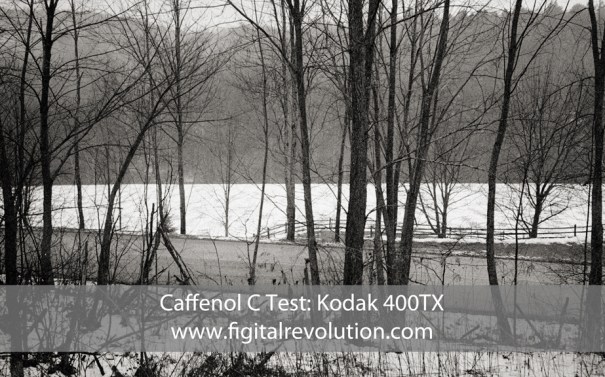
My first test rolls were Kodak 400TX in both 35mm and in 120. The 35mm (above image) was shot in my Leica MP with a 28mm lens and the 120 was shot with the Cuboid using a F72 pinhole.

The method I used for mixing the developer can be found here on Digital Truth. My agitation was 1st minute constant and then 3 inversions per minute till end of time which for 400TX I chose 30 minutes at 70 F. After looking at my test negatives I think they are over-developed by quite a bit but my Imacon had no issue making a good scan. The increased development was a result I believe of the ascorbic acid added in the Caffenol C recipe. If I were to do 400TX again with this recipe I would go for around 20 minutes but I would need to run a test to confirm that time.

If you google Caffenol C or just Caffenol you will find a wide range of opinions regarding this processing technique. The grain is large and sharp and the film is VERY low contrast but that can be a good thing for scanning.

So why would you want to do this?

  1. It’s cheap.
  2. It is enviromentally sound.
  3. It has a unique visual quality from other developers I’ve used… a “vintage” quality.
  4. It produces negatives that are “easy” to scan.
  5. It can be done on almost all films with varying degrees of success.
  6. It’s fun!

If you want to see a larger version of the picture above click here. Please note it is a large file.

Next test…. Ilford Fp4+ in Caffenol C using the time suggestion also found on Digital Truth. The 400TX I used for this test is a bit too fast for my current needs and from what I can gather from other users of Caffenol C Fp4+ is a good choice… stay tuned.

One last note… it smells like hell!

Viva la Revolution!

Link to article on RIT (Rochester Institute of Technology) web site:

A Use for that Last Cup of Coffee: Film and Paper Development

The Cuboid Multi-Aspect Ratio Pinhole Camera – Part 2

TheCuboidThe Cuboid is set for release December 1, 2009 so over the next month I will do one article a week focusing on this unique new camera in addition to my regular articles.
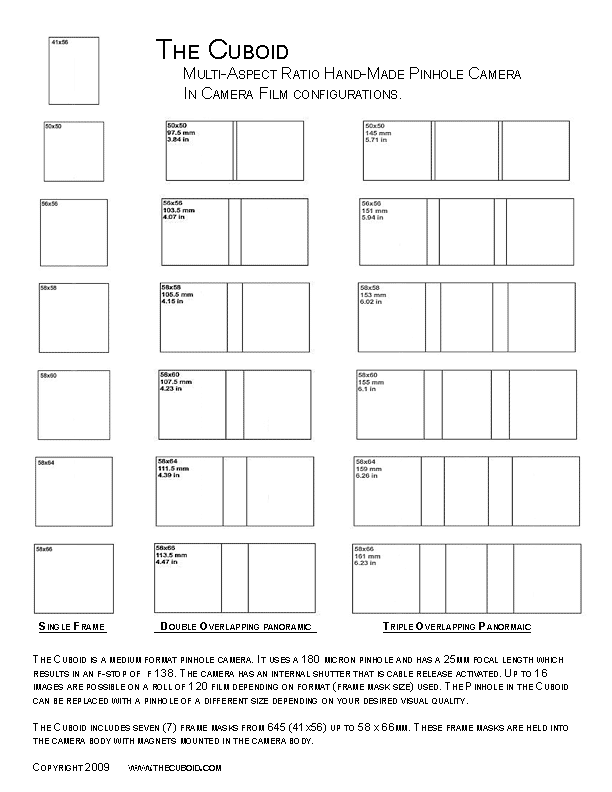
The first in this series is on the multi-aspect ratio possibilities of the Cuboid. The attached imageTheCuboidFrameSheet illustrates that with the 7 included masks the Cuboid is capable of an incredible variety of image sizes and also is capable of doing the Overlapping Frame Panoramic Technique I outlined here on Figital Revolution a few months ago- but to a much greater degree of control and creativity.

Viva la Revolution!

The Cuboid Multi-Aspect Ratio Pinhole Camera

Click on the video below to watch a 10-minute overview of the new Cuboid multi-aspect ratio Pinhole Camera.

The Cuboid is in final testing now and is expected to be released around December 1, 2009. This is a very limited production camera- at first, only 3 will be available with an additional 6 cameras around March 2010… each is entirely hand-made by Matt Abelson of Abelson Scope Works. The Cuboid will be available exclusively here on the Figital Revolution E Store / Indian Hill Imageworks, so stay tuned!

NOTE: I will be in NYC for Photo Expo on Friday, October 23, with my Cuboid in hand… so if you see me on the floor and want to chat, just give a shout!

Viva la Revolution-

Stephen

A Few of my Favorite Films

AudioBlog LogoClick on the audio logo to listen to this 10 minute discussion on my favorite films both black and white and color and which developer combo I use at Indian Hill Imageworks for the vast majority of my artworks.

Is Archiving Film Necessary

AudioBlog Logo

There are two parts to this post: first an HD video for fun followed by an 8 minute thought-provoking discussion on the “need” to archive film in the hybrid workflow- click on the Audio Logo to listen…

When Everything Old is New

AudioBlog Logo

Click on the Audio Blog Logo to listen to this 4 minute audio by Stephen Schaub.
Below is a perfect example of old plus new… the new Lomo Fuji Instax Mini back, which is designed to fit the new Lomo Diana F+ (nice but a bit too sharp for my taste)… but with a bit of work (about 2 hours)  it fits the vintage Diana Camera and Diana clone cameras perfectly and has a resulting look and feel that is amazing!!… more on that soon.

532_0174
Notice nice fit... NO TAPE NEEDED!
532_0173
Now Thats a Thing of Beauty!
532_0175
Perfect fit on the bottom with no light leaks!
color_milltertowndinnerct_aug09diana151mod1
Diner. Exposure 1 second hand-held. Scan from Instax Positive.

How Film is Made… Then and Now at Kodak

how-film-is-made-movie
Click to Watch 1958 Movie on Kodak Film

AudioBlog

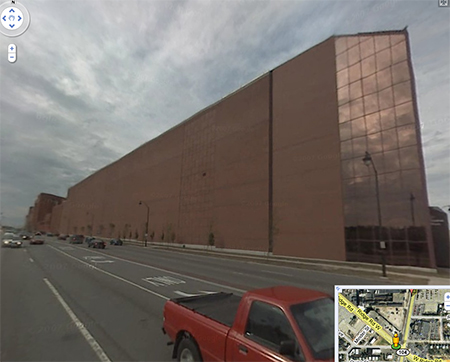
Click on the Audio Blog logo to listen to a 5 minute discussion on film production today at Kodak and how it has changed from the above video from 1958 “How Film Is Made… for your camera“. The audio references my recent trip to Eastman Kodak and a white light tour of Bldg. 38 where all films made by Kodak are produced from Ektar to TX to motion picture. The video below is of our group getting ready for the tour.

Kodak bldg38 from Google Map

Kodak Retires Kodachrome – So What Now?

Kodachrome1935Boxand2009Box
Kodachrome 1935 Box and 2009 Box

We all knew this day would arrive: when the iconic Kodachrome film would be retired. This film that has been with us for 74 years is intertwined with the very fabric of our photographic history, images, and emotions. Last week I was invited to a “secret” meeting at Kodak to hear the news and to discuss the future of film in our industry. There were 3 other industry experts in attendance:

AudioBlog
Kodachrome Interview

After leaving the meeting I do feel convinced as to Kodak’s ongoing support for film photography and the belief that both film and digital should coexist… it’s best for the photographic industry… with a capital letter “P”.

Listen to the audio-blog portion of this post by clicking on the audio logo to hear a 10 minute conversation between Stephen Schaub and Eve Ogden Schaub with further insights on this mission to Kodak and what it all really means.


And what post on Kodachrome would be complete without the required Paul Simon song…

PS- there is even a state park named for Kodachrome:

Kodachrome Basin State Park

Here is a link to the sole processing facility for Kodachrome films… I’m sending some this week!

Dwaynes Photo

Click here for the official Kodachrome retirement press release from Kodak.

Viva la Revolution- Stephen