Processing Black and White Film for Scanning – Diafine and TX!

If you’re like me you’re always on the lookout for a great black and white film/ developer combo for scanning. I’ve tried many different films and developers and then recently stumbled upon the great marriage of Diafine and TX (Kodak Tri-x)…my new standard. Watch the videos below to learn more about this dynamic combination and for tips on proper processing techniques as well as a few quick tips on scanning black and white negatives. Be sure to also check out my sample pictures under the videos to see just how good it is. (Click on the images for a larger view.)

Video:

Please note that due to YouTube 10 minute video limit I had to break this 12 minute discussion into two parts. (Be sure to watch both videos!)

Video 1

Video 2

Example Pictures:

This image illustrates the huge dynamic range possible with TX and Diafine. In this example TX was rated at 1600, 35mm. (Check out that shadow detail!)
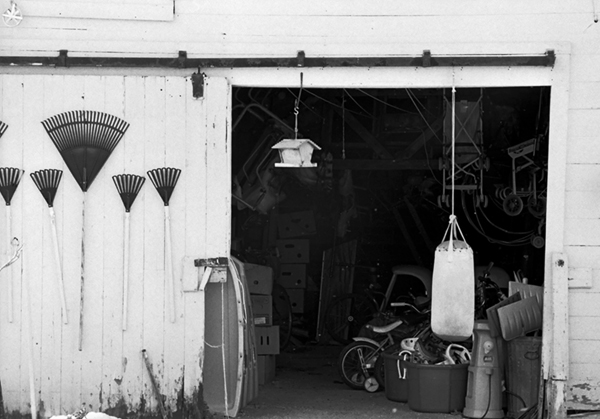
TX1600_DynamicRangeExample

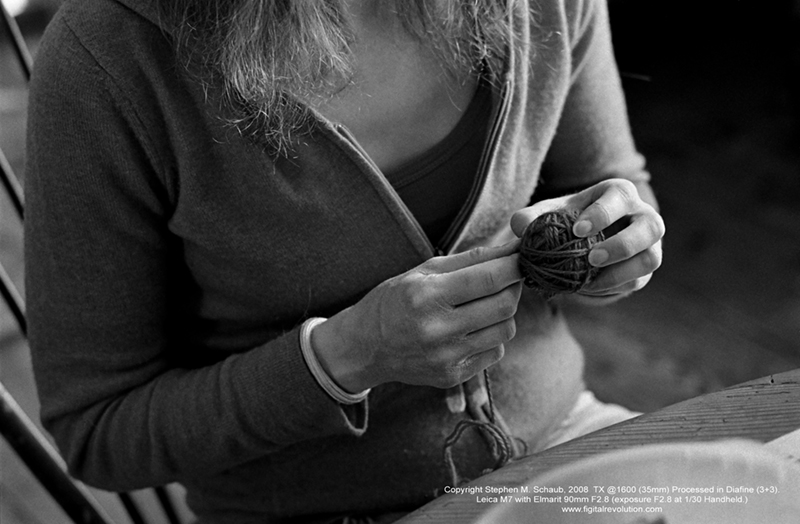
This example is TX at 1600 in low flat lighting…the full print size is 16″x24″ and the crop is a 4″x6″ section out of the full image area. Film size: 35mm
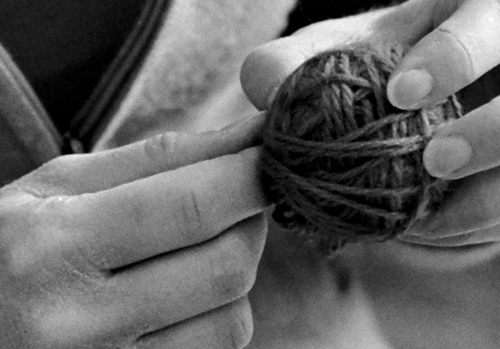
This example and the close up represent TX at 1600. The final image size (print) is 16″x24″ and the crop represents a 3″x3″ area of the final image at full size. Remember…this is TX at 1600 in 35mm!!

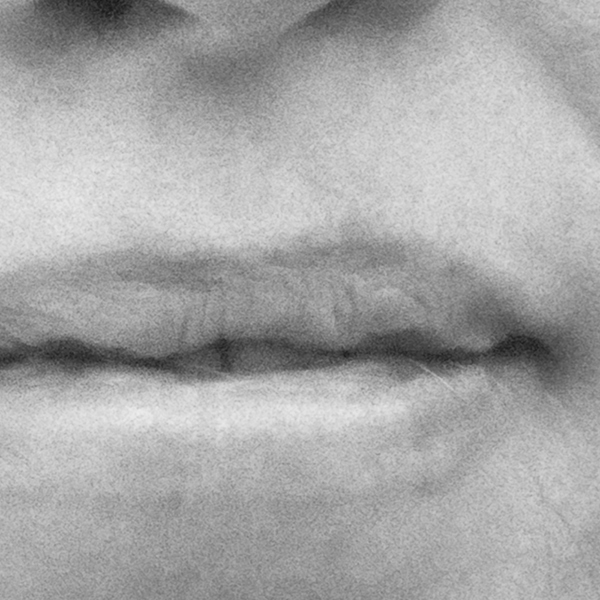
EveCropAt1600TX35mm16_24print

Processing Information for Tested Films:

Fuji Acros 100 EI 200 70-75 5+5 (Best choice for really big enlargements and where an EI of 200 is ok.)

FP4 EI 200-250 70-75 3+3 (Very nice but I prefer PMK for FP4).
TMY-2 EI 500-640 70-75 3+3 (Very nice combo but I’d stick with Xtol or D76 1:1…see my review of this film here on the Figital Revolution.)

TX EI 1250-1600 70-75 3+3 (My personal favorite and my new everyday film. I also keep an ND filter with me (.9) for the bright afternoon light and just remove it as the day ends so I can shoot this film all day long on my M7 with no worries!)

All chemicals are mixed with distilled water. Processing is done by hand with stainless steel tanks and reels.

I will be posting Part 2 in a few days which will cover my scanning techniques (specific and general) as well as basic file handling. Part 3 (next week) will focus on the final print and have a demo (yes another video) on hand coating your own paper for inkjet. Stay Tuned!!

For a quick audioblog on my printing techniques and my thoughts on tonality just click on this link: A Fear of Gray

All images and video Copyright Stephen M. Schaub 2008

The Final Word – A Rebutal to END ALL Rebutals

Schaub Y StrapIf you spend as much time as I do on the web (drinking espresso) you come across some pretty interesting assertions by photographers from all walks of life. I have posted this audioblog in an effort to ameliorate and perhaps provide a bit of “middle ground” for a conversation between the Luminous Landscape and Ken Rockwell. (To read each original article just click on the links below:)
 

Luminous Landscape Article – Your Camera Does Matter

Ken Rockwell Article – Your Camera Doesn’t Matter

AudioBlog LogoOk, now that you’ve been outraged by the silly, over-the-top claims on all sides, and are searching for some clarity in your photographic life give this audioblog a listen….it’s therapy time. In the end we can and should all get along!

Thought for the Day.

Abe“The best way to predict your future is to create it.”

                                –  Abraham Lincoln

This is a key underlying concept of the Figital Revolution…if we as photogrpahers band together and speak out about what we want in our industry, the industry will be compelled to listen! So over the next few months I will be conducting brief surveys (3 yes or no questions each) on what the photographic community really wants. So click on the survey link and and make your voice heard! I will post the results on The Figital Revolution and also use this information in meetings with industry (aka The Photo Industrial Complex) to illustrate what Real Photographers- that’s you- want! Please note you must enter your email address at the end of the survey to keep voting honest… please only VOTE once… it’s how Lincoln would have wanted it.

Link To Survey!

 Via La Revolution – Stephen Schaub

Please note that by completing this survey your email address will NOT be shared and you will NOT be added to any email mailing list. If you would to receive our online newsletter just click here to subscribe as it is FREE!

The Real Story On Digital Permanence

AudioBlog Logo
A wakeup call for photographers, paper manufacturers and ink makers on the enigma of proper digital print presentation, finishing and long term storage. Do you think traditional darkroom prints and digital prints (say inkjet) can be finished using the exact same technique and materials (like most galleries and frame shops?) …WRONG! Give a listen and lets make this important discussion happen now before digital printing is forever labeled as less archival, less permanent- LESS in general than traditional darkroom prints….it just ain’t so.

Thought For The Day.

Our Fearless LeaderSadly enough, it bears repeating (and repeating…): digital and analog are different and choice is good. Why does one have to win? I just came across oh-yes-yet-another-article in which the author in the very first paragraph states that digital is better than analog. “There. I said it,” opines self-described “fussy pro” Jim Richards in NARFE magazine.

Nice, of course, to see the huge ad for a SONY digital camera-whoops, I mean “illustration”- inserted in the article as “content”…who do you think is paying for this fake article, eh? We are, as the flood of mis-information continues to poison our industry.

Merry #@$%^ ing Christmas!

Plastic People

“With great power comes great responsibility.”

                                                      Stan Lee, From the first issue of Spider Man

These words should be branded on photographers world-wide.

Why do I say this?

I just received the current issue of “Professional Photographer Magazine” today (I’m not quite sure why I receive this magazine) and noticed that almost all the images of people in the magazine- articles and ads alike- were not… real. These poor folks had been retouched out of existence…morphing into Zappa-esque “Plastic People”. I had to do a double take on more than a few of them to check to see if they really were photography, rather than CGI (computer generated imagery) …and the scary thing about that is that on more than one I’m still not really sure.

But we’d be lucky if this phenomenon were limited to the pages of one crappy industry rag. Just go to your local bookstore and check out the magazine stand and you’ll see the magnitude of this travesty…WARNING: it is so scary that I would only recommend it to photographers over 18 years in age due to the shocking and graphic nature of the visual insanity. How could we as photographers have forgotten that it is the human element in an image that counts and that the quest for the perfect print/ perfect model/ perfect everything is doomed to perfect failure? That the quest for Perfection in the wrong hands can kill a photograph? A true master photographer knows to when to stop. You the photographer with a click of your mouse and perhaps the wave of your wand have the full capacity to squeeze every bit of life and passion out of even the most amazing image…so just don’t do it. Yes your computer is amazing and yes your skills at Photoshop are fantastic but don’t feel like you need to use all of them at once on every single image…for the love of god, man, step away from the computer!

So where do we go from here? I for one am taping the quote from Stan Lee to my desktop and the next time I am tempted to remove just one more wrinkle I will read the quote and recall with a shudder the insanity epitomized by “Professional Photographer Magazine.”

It’s the Print That Matters

By Stephen M. Schaub

Morning Quickie…

I heard over and over needless concern from fine art photographers about which media to print on and which media is accepted by the industry and which is not. This disturbs me as we are talking about a work of ART and not something which can easily or should necessarly even fit into a neat category or process. If your work is printed on canvas, hand-made paper or Saran Wrap who cares as long as it is the correct media for your work. Collectors buy work based on what they love. Archival is nice but way overemphasized by photographers- brilliant color and deep blacks can be great but it depends on the work. If archival was king Pollock wouldn’t have sold a thing.

In the end it is your work, not a gallery’s or publisher’s or anyone else’s- it is up to you to decide how it is printed and displayed…let the Photo Industrial Complex and the ART world control this part of our medium and I think I’ll take up lawn mowing for a living.

It’s About More Than Pixels Guys!

I’ve got a bone to pick…(who me?) I am getting really tired of reading “reviews” about how much better the release of new “X” digital camera or capture back is than film. Recently I’ve been noticing that many of these “experts” are making claims that 4″x5″ film has now been beat or surpassed.

Excuse me, but- what? Do I really need to say it? It’s about more than pixels, guys!

This is, we should all be aware, an argument designed first and foremost to part you from your pocket book. As in: spend, spend, spend!

Consider this… in order to get a capture device that will equal high-end film scans from, say, a medium or large format camera, you are spending $30,000+ dollars on bleeding edge technology (whoops- is it the technology that’s bleeding… or is that us?). Furthermore, remember its life-span is about equal to that of an ant when compared with the legacy of film-based cameras. Realistically, unless you have clients willing to spend tons of money for your services (great for you) or you are just really rich there is NO WAY to get back your financial investment in this type of system before the camera industry trumps your purchase and convinces you that, once again, it’s time to upgrade, upgrade, upgrade! I’ve been down this road enough to know that it is very difficult indeed. These days, I personally prefer the upgrade expense of a new roll of film or sheet of film, it just seems a bit more sustainable. Call me crazy, but I’d rather spend my money on technology that is immediately meaningful such as a better monitor or of course more RAM.

Not to mention, it really is about more than pixels… seriously! There is an inherent “look” to everything: a great film scan, a great digital capture, and to the finished prints from both types of files…you have to choose which you like. That’s right! Despite what you’ve heard, each one is okay. Ultimately, the choice is up to YOU. I will confess here and now that the very high end digital capture systems do in many ways equal great film scans in terms of resolution (or get darn close) but it is different look, kind of like the difference between vanilla and French vanilla ice cream- you know, similar, but different. Bleeding edge digital capture has it’s definitive place on high-end advertising shoots and for situations where you need really fast turn-arounds, but that is a small section of the overall photography market.

Another technique of these “expert” reviewers is to compare something like ISO 100 film with 100 ISO on a digital back… we are lead to conclude that at the best of the best all things are equal or better for digital. I guess these experts want you to forget that most pro film lines are available in ISO’s like 64, 50, 32, 25 and even 15…stack that side by side with a digital capture. Hey- film has this option (or in digital terms “upgrade”). It’s interesting that when there are positives on the digital side reviewers point it out at every opportunity but when the shoe is on the other foot? Silence. The fact is that a low ISO hi-res film scan is impossible to beat with the current digital technology. But why point that out? After all, we have to move those new digital cameras somehow to make room for the next “technological breakthrough,” which at the current pace should be sometime around next Wednesday.

So, the choice is yours… but whatever you do, don’t buy into the BS “reviews” who fail to realize that different is good! Choice is good! Right now we need reviews more about working with a system day in and day out, the durability of the system long term… and YES have an honest, open discussion about how to make your personal choice and investment work. For if we can’t, photographers will just keep on bleeding at the local camera store until there is nothing left to bleed.