How Film is Made… Then and Now at Kodak

how-film-is-made-movie
Click to Watch 1958 Movie on Kodak Film

AudioBlog

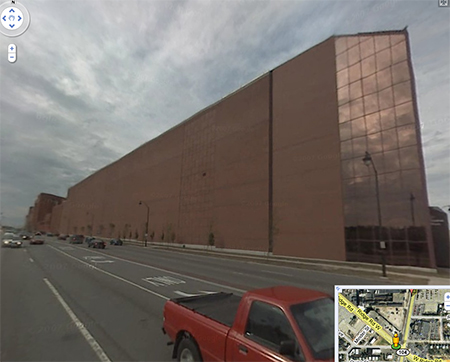
Click on the Audio Blog logo to listen to a 5 minute discussion on film production today at Kodak and how it has changed from the above video from 1958 “How Film Is Made… for your camera“. The audio references my recent trip to Eastman Kodak and a white light tour of Bldg. 38 where all films made by Kodak are produced from Ektar to TX to motion picture. The video below is of our group getting ready for the tour.

Kodak bldg38 from Google Map

Working at Less Than 100 Percent

Most pinhole images are made using a pinhole that is very close to- or at the optimum size for- the chosen focal length and in most cases this is a good choice for general photography: it lets you get the best quality image a pinhole can produce. That being said, while testing the PinZonie I have been experimenting using pinholes that are in some cases up to 2 stops more open or closed than the optimum setting and really liking the creative options it gives me.

As I always say… experimentation is key!

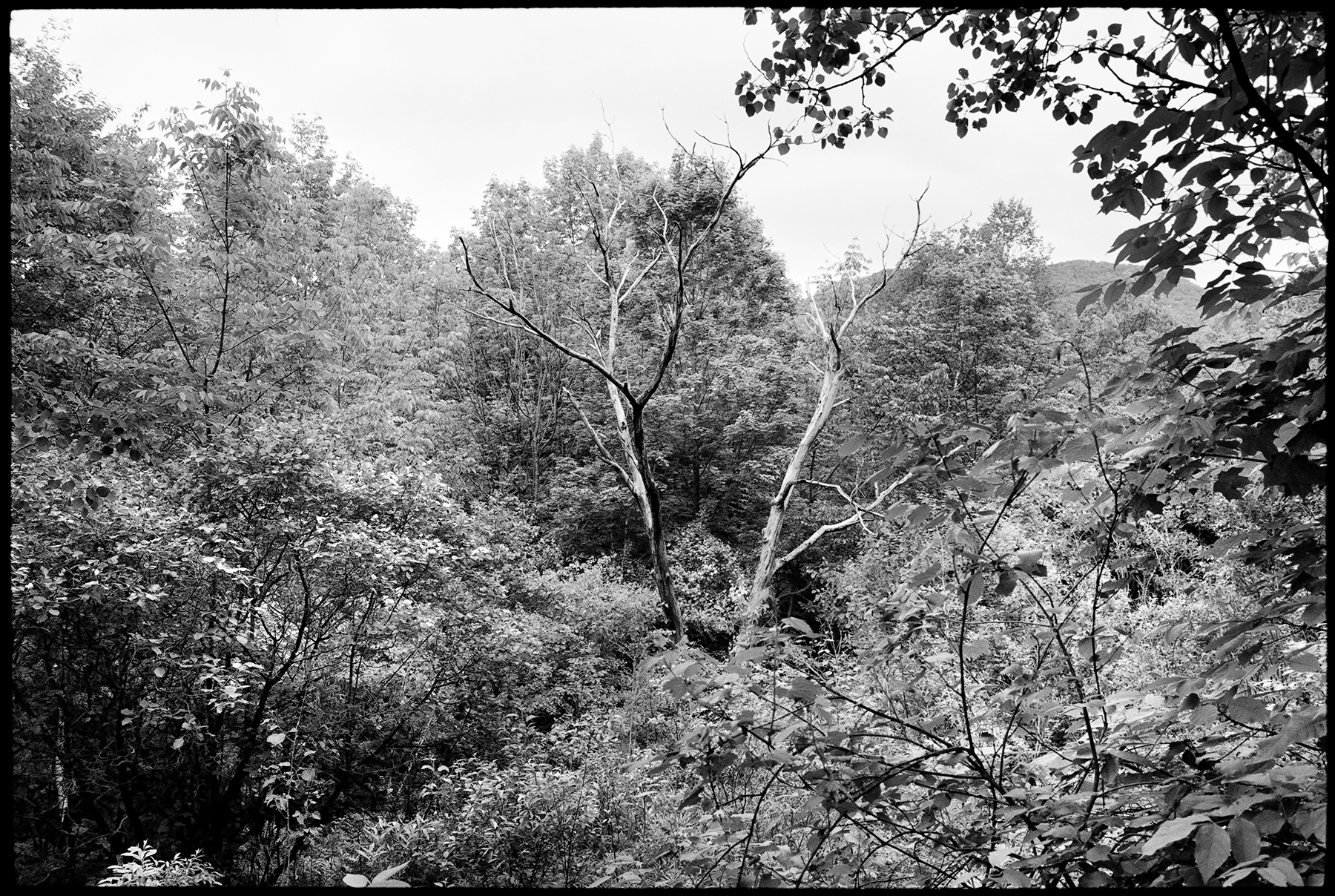
Pinzone-2Pinhole28mm

Trees in Afternoon Light, Massachussettes. 2009
From the Negative Series
28mm PinZonie, Pinhole Setting, -2 stops from optimum
Kodak BW400CN, Scanned on an Imacon Scanner
d’Vinci Noir Print on Hand-made Bhutan Mitsumata Thick White
Copyright Stephen Schaub 2009

Kodak Retires Kodachrome – So What Now?

Kodachrome1935Boxand2009Box
Kodachrome 1935 Box and 2009 Box

We all knew this day would arrive: when the iconic Kodachrome film would be retired. This film that has been with us for 74 years is intertwined with the very fabric of our photographic history, images, and emotions. Last week I was invited to a “secret” meeting at Kodak to hear the news and to discuss the future of film in our industry. There were 3 other industry experts in attendance:

AudioBlog
Kodachrome Interview

After leaving the meeting I do feel convinced as to Kodak’s ongoing support for film photography and the belief that both film and digital should coexist… it’s best for the photographic industry… with a capital letter “P”.

Listen to the audio-blog portion of this post by clicking on the audio logo to hear a 10 minute conversation between Stephen Schaub and Eve Ogden Schaub with further insights on this mission to Kodak and what it all really means.


And what post on Kodachrome would be complete without the required Paul Simon song…

PS- there is even a state park named for Kodachrome:

Kodachrome Basin State Park

Here is a link to the sole processing facility for Kodachrome films… I’m sending some this week!

Dwaynes Photo

Click here for the official Kodachrome retirement press release from Kodak.

Viva la Revolution- Stephen

Kodak BW400CN, Fantastic Misunderestimated Film

Many of the chromogenic (C41) process black and white films get mixed reactions on the web from working photographers, but my recent and continuing exploration of Kodak BW400CN has changed everything in my mind and in a very good way. To listen to the audio portion just click on the audioblog logo.

AudioBlog LogoTest Image: Kodak BW400CN exposed at box speed (400) and scanned on an Imacon Scanner. Minor contrast and density adjustment were applied in Photoshop CS3. Negative was made using a Leica M7 with a 28MM Elmarit F2.8 ASPH lens. Please note the file is larger than most here on FR so you can really see the stunning tonal range and detail. One additional note on the weather here in Vemont… it has been raining a lot and as such this image was made on an overcast day, thus the gray sky.

BW400CN_400

Film Scanning Technique 101

AudioBlog Logo

In this audioblog I present a philosophy of scanning film based on the understanding that in the end photographers make prints and our entire process from film capture to scan to Photoshop to printer is all based on making prints. I outline in detail techniques and settings which will apply to most scanners and will help you get the most of your film and scanner combination. This is a very long audioblog- 27 minutes- and as such have paper and pencil ready, as you won’t want to listen to my voice for this long twice!

Full Process Example Image

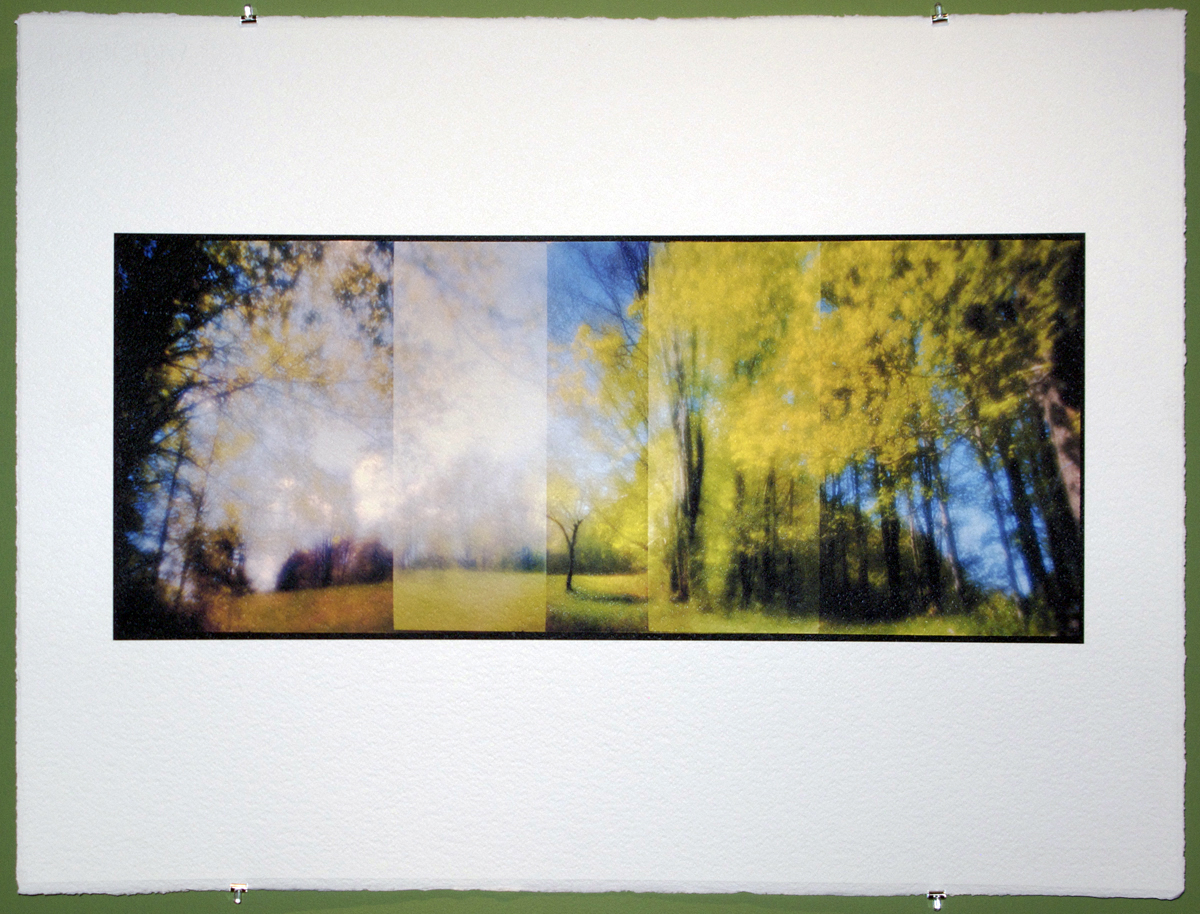
YellowSpringPawletVermont2009

Yellow Spring, Vermont. 2009

This recent artwork of mine is a good example of the process outlined in the audioblog. I started with Kodak Ektar 100 film (35mm)- I’ve tested this film and understand how to get the most out of it in a variety of different lighting situations. The camera was my Leica M7 with a 28mm Zone Plate, and the image was made using my Overlapping Frame Panoramic Technique outlined here on FR. After processing (C41) the negative was scanned dry on my Imacon at 4000 optical dpi, 16 bit as an RGB positive, with miminal sharpening and dust removal. All other editing and contrast adjustments were done in Photoshop.  My chosen Photoshop color working space as well as the scanning color space?sRGB.

Final thought

Knowing the real limits of your workflow, technology and skill level and having a clear understanding/ feeling for your visualized final print helps make the entire process a very fluid and creative endeavour. Test first and remember: experimentation is key!

Viva la Revolution- Stephen

UPDATE: 5.16.09

Link to BETA RGB:http://www.brucelindbloom.com/

Click on Info, then click on Beta RGB: A New Working Space Proposal… the BETA RGB download if found on this page… spend some time on this site as it is a wealth of knowledge.

High Speed Pinhole and Zone Plate Photography, Part 3

AudioBlog Logo

The final installment of this series provides information on all films tested, thoughts on Zone Plate and Pinhole as it relates to these films and observations and conclusion on this process. The audio portion can be heard by clicking on the Audio logo: note the audio portion is around 16 minutes.

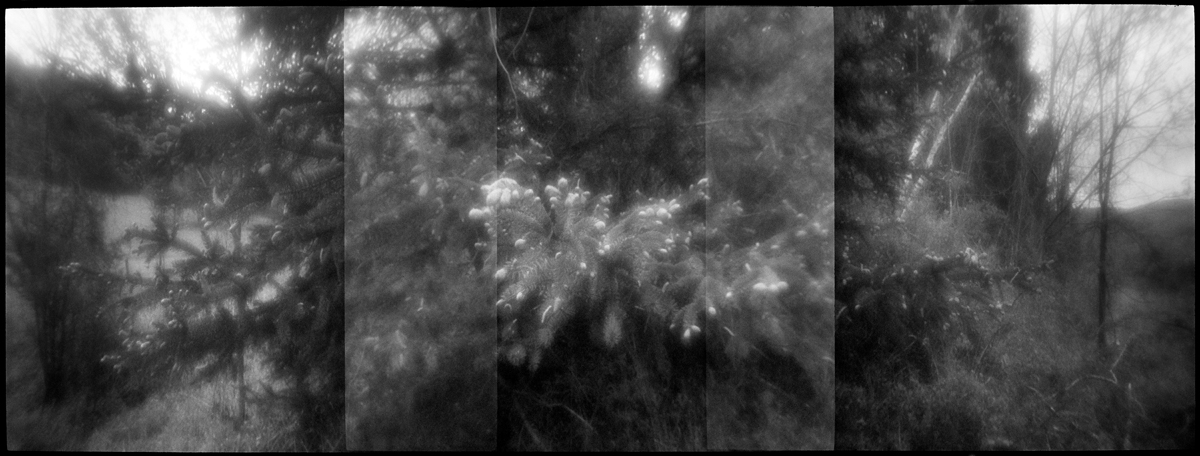
PineBudsTmy2testzonem71600
Pine, Vermont. 2009
28mm Zone Plate on Leica M7
Overlapping Frame Panoramic Technique (3X)
Film: Kodak TMY-2 (Tmax 400) at an EI of 1600, processed in Xtol Developer.
Printed on Fabriano 640 gsm, edition size one.
Copyright Stephen Schaub 2009

ZonePlateLongHHExpTestEktar100

Spring Blossom, Vermont. 2009
28mm Zone Plate on Leica M7
Overlapping Frame Panoramic Technique (3X)
Long Hand Held Exposure, 30 sec +/-
Film: Kodak Ektar 100Printed on Fabriano 640 gsm, edition size one.
Copyright Stephen Schaub 2009

ZonePlateLongHHExpTestEktar100_2

Field Edge, Indian Hill, Vermont. 2009
28mm Zone Plate on Leica M7
Overlapping Frame Panoramic Technique (3x)
Long Hand Held Exposure, 20 sec +/-
Film: Kodak Ektar 100Printed on Fabriano 640 gsm, edition size one.
Copyright Stephen Schaub 2009

High Speed Pinhole and Zone Plate Photography, Part 2

AudioBlog LogoIn this audio blog I discuss my testing results for Kodak P3200 at an EI of 6400 for hand-held pinhole and zone plate photography as well as the new direction Part 3 in this series will explore. Click on the Audio Logo to listen…

LINK: TMY-2 @ 1600 article here on FR.

High Speed Pinhole and Zone Plate Photography, Part 1

zoneplateimag

Part of my ongoing creative exploration of Zone Plate and Pinhole photography has entered a new area… high speed film. Most applications of Pinhole or Zone Plate photography require the use of a tripod or some sort of support device but that does not fit with my current shooting style SO I have just run tests of Ilford Delta 3200 and Kodak P3200 in a variety of different developers from an EI of 3200 – 25,000 to see if it would be possible to hand hold exposures under a variety of common lighting situations and get a negative that-when-scanned would have all of the expressive grey tonality I need with contrast in check… the answer is Yes! The best film for pinhole and zone plate high speed applications in my opinion would be the Kodak P3200 at 3200 – 6400. The sample images below are just a very quick test done at the end of the day in rainy overcast very flat light… the image on the left is a 28mm F32 zone plate on my Leica M7, the image on the right is a 28mm F151 Pinhole also on my Leica M7… both hand-held at shutter speeds over 1/30th even in this dismal low light… shot at an EI of 6400. The cropped image  is a 5″ x 5″  example section of the pinhole image scaled to 20″ x 30″ … remember this is an EI of 6400 shot through a pinhole. I think the visual quality is amazing and I plan on shooting this afternoon and posting a fuller series of articles starting in a few days with the “secret” developer info as well as thoughts on working with pinhole and zone plate with high speed films on a variety of different cameras. Just a quick note- no noise reduction or sharpening has been applied to any image and all images are dry scans on my Imacon Scanner.

p3200fullzonepinjpg1
Left Zone Plate, Right Pinhole
55crop_pinfullsize1
5" x 5" Crop of a 20" x 30" Print.

The sun has just come out (lots of rain here in VT this time of year) so I am off to shoot!

Viva la Revolution- Stephen

UPDATE: Ok so most of the day has passed and I have managed to shoot two rolls of the Kodak P3200 at and EI of 6400  (the sun was out for exactly 2 hours!) and just finished processing them… they look fantastic! My exposures were for the most part using the pinhole (f 151) at shutter speeds ranging from 1/60 to 1/15 on my M7. I will post images sometime tomorrow…

Leica 28mm Elmarit f 2.8 ASPH Meets Kodak Ektar

Leica 28mm F2.8 ASPH

Just a quick post… I’ve been looking for an “affordable” Leica 28mm lens and was able to make the move last week as Leica has a $300 dollar rebate now available! I decided on the 28mm Elmarit F 2.8 ASPH for a few reasons:

1. It is really small and light and only blocks a very little bit of the lower right corner of  the viewfinder on my M7 when the hood is attached- none when it is not.

2. According to test reports* it’s damn sharp (I agree)… see print below / link. Additionally it has very little distortion and a very nice OOF (out of focus) rendering.

3. I had owned the Voigtlander 28mm F 1.9 Ultron lens a few years back and was not really that impressed (so I sold it) and the Leica 28mm F2 ASPH Summicron was out of the question due to the cost and it is a larger lens which blocks more of the viewfinder.

So how good is this lens….

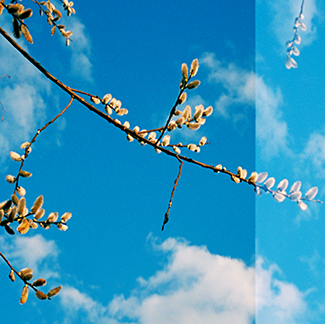
Spring Buds, Vermont. 2009

Print 1: Full size print 9.5″ x 25″. Printed on Hand-coated Fabriano Artistico 640 gsm.
Spring Buds, Vermont. 2009 Crop 1

Print 2: Crop 4.5″ x 4.5″ of Full Size 9.5″ x 25″ Print

Spring Buds, Vermont. 2009 Crop 2

Print 3: Crop 4.5″ x 4.5″ of Extreme Full Size 19″ x 50″ Print!

Note:  The negative was scanned on an Imacon Scanner (wet mount) at 4725 optical dpi, 16 Bit… about a 500MB file. Film… Kodak Ektar 100.

Viva la Revolution-
Stephen

Want / need more information on the Leica 28mm Elmarit F2.8 ASPH… here is a link to a detailed review by Erwin Puts.

The New Kodak Ektar Film in 120 – A Quick Review

As promised here is a quick review of the new Kodak Ektar film in 120!

Full 120 Ektar Test Image

Click on image to see crop detail… full size image is 40″ x 40″, crop detail is a 4.5″ x 4.5″ section outlined in the above image as a white box. 

Technical Stuff… 

  • Camera: Rollei TLR “F”
  • Exposure: 1/60 at F11
  • Film: Kodak Ektar 120, EI 64 (Same as my test for the 35mm version.)
  • Scanned on an Imacon Scanner, dry.  I did my scan using a color setup I had created for the 35mm version of this film (scanner setting all balanced to a Macbeth Color Chart in direct sun) and found that it matched perfectly when opened in Photoshop.

 macbeth-color-checkerColor Chart Example. 

  • Photoshop adjustments limited to levels.
  • Full Size File: 600MB at 360 DPI which equals a 40″ x 40″ Print.
  • Cropped area equals a 4.5″ x 4.5″ section of the full 40″ x 40″ Print.

Conclusion… as with the 35mm version of this new film from Kodak it is hard to find something not to like… it scans quite easily, has great contrast and color, very fine grain with good sharpness. Again, I feel that it performs better in contrasty light at and EI of 64 than the box speed of 100 but that is just my opinion. Link to First Ektar Article here on FR.

ONE QUESTION… did you see the bent nail in the detail crop?… WOW!

Viva la Revolution-
Stephen