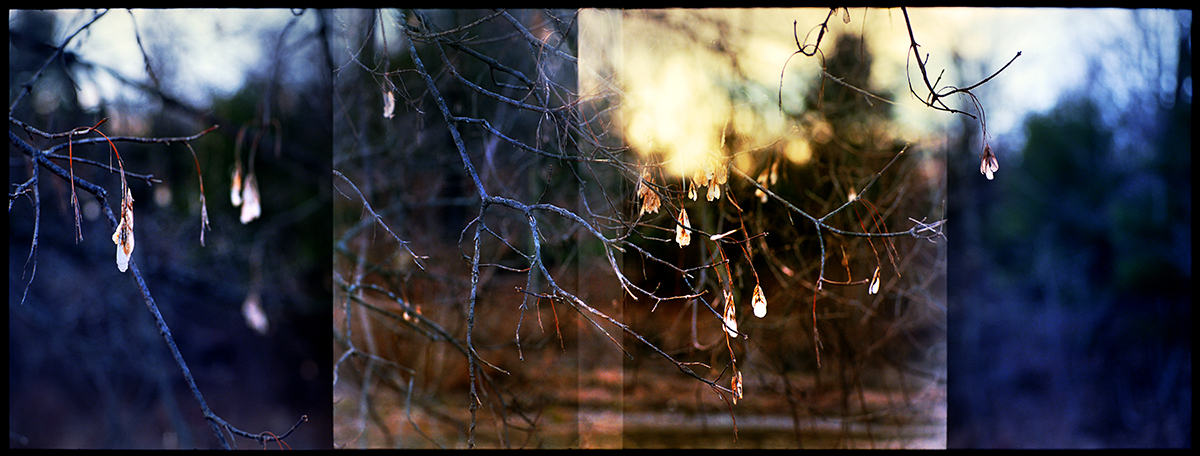
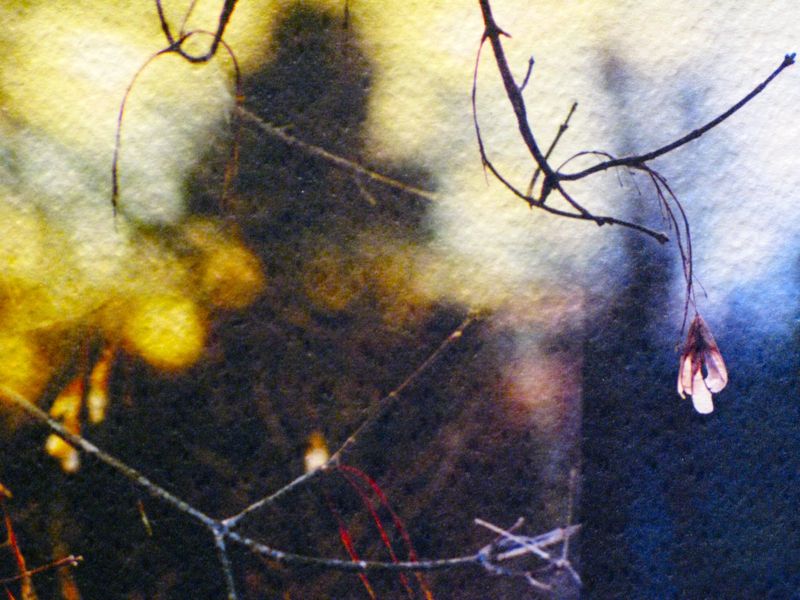
How Film is Made… Then and Now at Kodak

how-film-is-made-movie
Click to Watch 1958 Movie on Kodak Film

AudioBlog

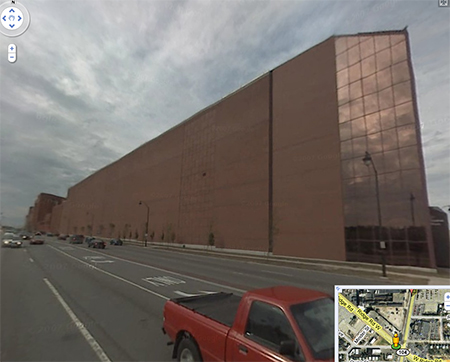
Click on the Audio Blog logo to listen to a 5 minute discussion on film production today at Kodak and how it has changed from the above video from 1958 “How Film Is Made… for your camera“. The audio references my recent trip to Eastman Kodak and a white light tour of Bldg. 38 where all films made by Kodak are produced from Ektar to TX to motion picture. The video below is of our group getting ready for the tour.

Kodak bldg38 from Google Map

Film Scanning Technique 101

AudioBlog Logo

In this audioblog I present a philosophy of scanning film based on the understanding that in the end photographers make prints and our entire process from film capture to scan to Photoshop to printer is all based on making prints. I outline in detail techniques and settings which will apply to most scanners and will help you get the most of your film and scanner combination. This is a very long audioblog- 27 minutes- and as such have paper and pencil ready, as you won’t want to listen to my voice for this long twice!

Full Process Example Image

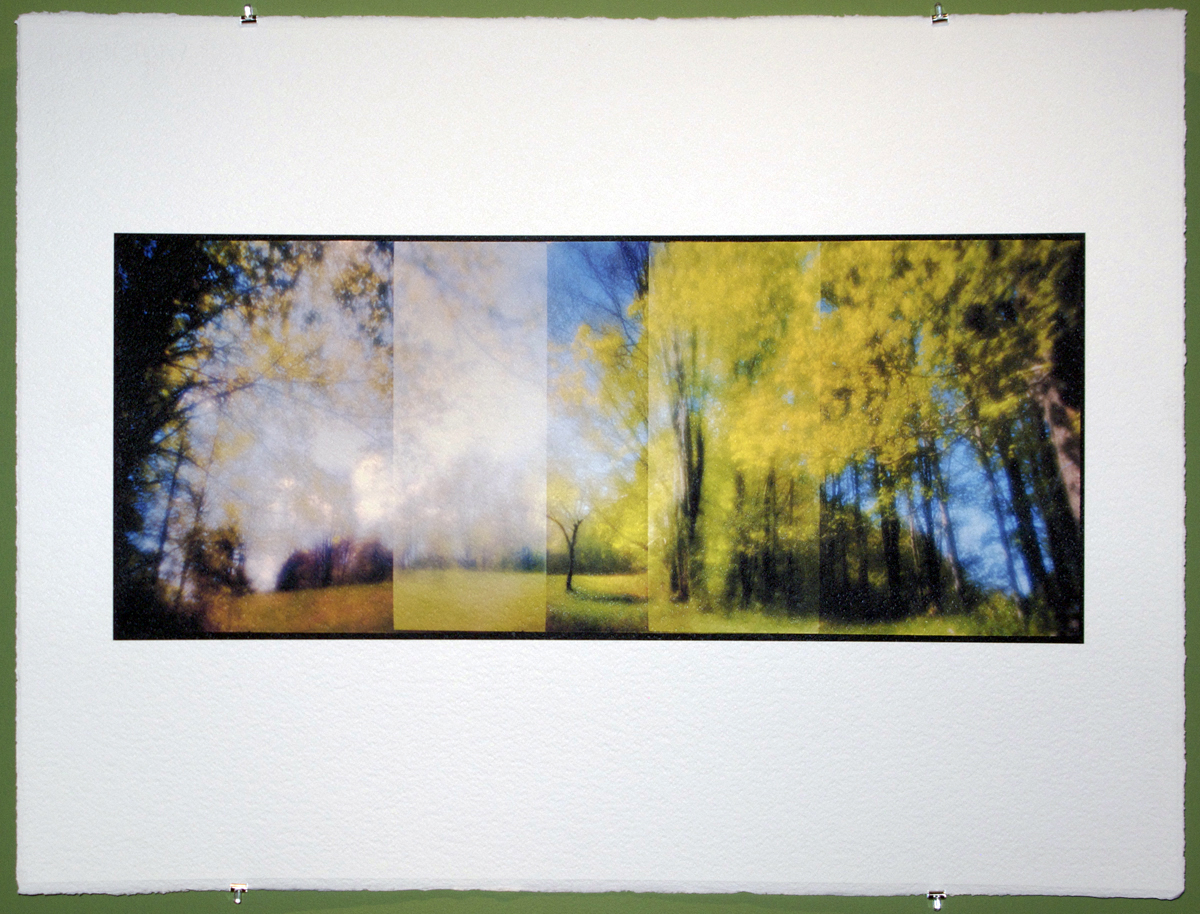
YellowSpringPawletVermont2009

Yellow Spring, Vermont. 2009

This recent artwork of mine is a good example of the process outlined in the audioblog. I started with Kodak Ektar 100 film (35mm)- I’ve tested this film and understand how to get the most out of it in a variety of different lighting situations. The camera was my Leica M7 with a 28mm Zone Plate, and the image was made using my Overlapping Frame Panoramic Technique outlined here on FR. After processing (C41) the negative was scanned dry on my Imacon at 4000 optical dpi, 16 bit as an RGB positive, with miminal sharpening and dust removal. All other editing and contrast adjustments were done in Photoshop.  My chosen Photoshop color working space as well as the scanning color space?sRGB.

Final thought

Knowing the real limits of your workflow, technology and skill level and having a clear understanding/ feeling for your visualized final print helps make the entire process a very fluid and creative endeavour. Test first and remember: experimentation is key!

Viva la Revolution- Stephen

UPDATE: 5.16.09

Link to BETA RGB:http://www.brucelindbloom.com/

Click on Info, then click on Beta RGB: A New Working Space Proposal… the BETA RGB download if found on this page… spend some time on this site as it is a wealth of knowledge.

High Speed Pinhole and Zone Plate Photography, Part 3

AudioBlog Logo

The final installment of this series provides information on all films tested, thoughts on Zone Plate and Pinhole as it relates to these films and observations and conclusion on this process. The audio portion can be heard by clicking on the Audio logo: note the audio portion is around 16 minutes.

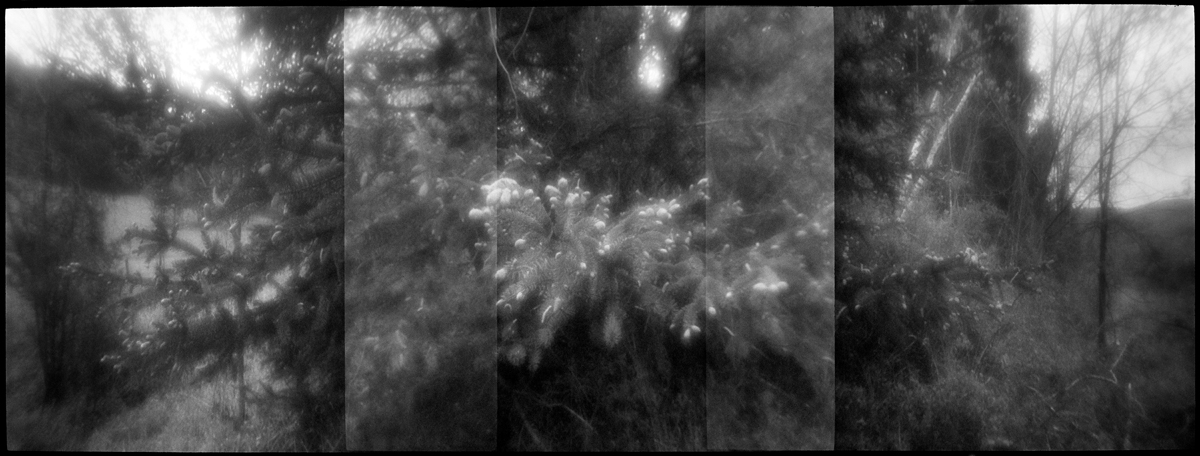
PineBudsTmy2testzonem71600
Pine, Vermont. 2009
28mm Zone Plate on Leica M7
Overlapping Frame Panoramic Technique (3X)
Film: Kodak TMY-2 (Tmax 400) at an EI of 1600, processed in Xtol Developer.
Printed on Fabriano 640 gsm, edition size one.
Copyright Stephen Schaub 2009

ZonePlateLongHHExpTestEktar100

Spring Blossom, Vermont. 2009
28mm Zone Plate on Leica M7
Overlapping Frame Panoramic Technique (3X)
Long Hand Held Exposure, 30 sec +/-
Film: Kodak Ektar 100Printed on Fabriano 640 gsm, edition size one.
Copyright Stephen Schaub 2009

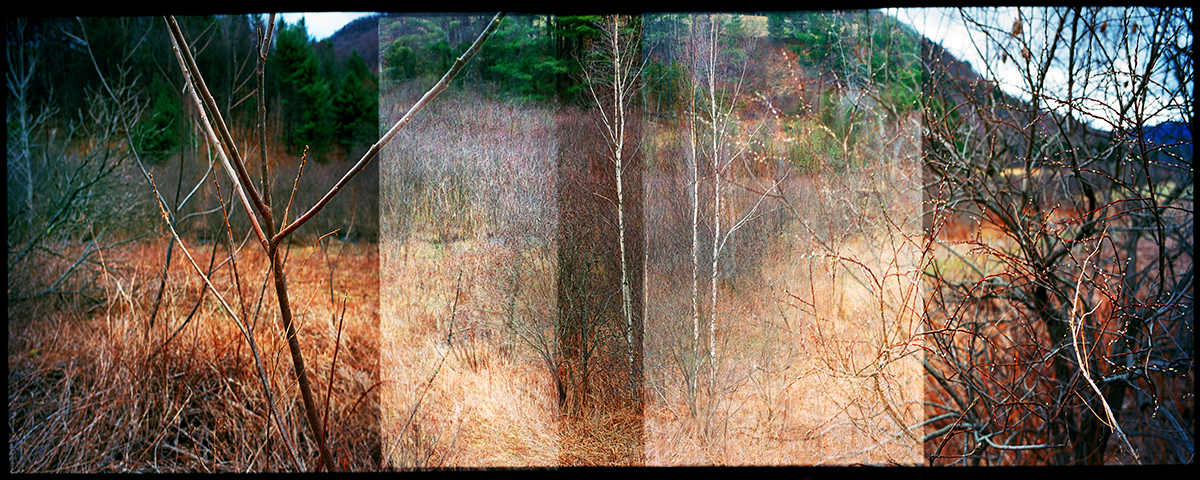
ZonePlateLongHHExpTestEktar100_2

Field Edge, Indian Hill, Vermont. 2009
28mm Zone Plate on Leica M7
Overlapping Frame Panoramic Technique (3x)
Long Hand Held Exposure, 20 sec +/-
Film: Kodak Ektar 100Printed on Fabriano 640 gsm, edition size one.
Copyright Stephen Schaub 2009

New Articles on Figital Revolution

I am currently working on three new articles:

  1. Getting the most from scanning film.
  2. Off center focus on rangefinder cameras. 
  3. Infinity focus- is it the best?

These and of course a Rant or two will be released in the coming days.

Viva la Revolution- Stephen

New Artwork:

oldandnewvt09fullsheet1

Old and New, Spring, Vermont. 2009
Capture: Leica M7 with a 90mm Elmarit Lens
Overlapping Panoramic Frame Technique (3x)
Film: Kodak Ektar 
Printed on Fabriano 640 GSM Rough, d’Vinci Print
Posted image is a quick digital capture of the actual print on Fabriano Rough.
Edition Size: One
Copyright Stephen Schaub 2009

New Artwork

I’ve been working for some time now with the Overlapping Frame Panoramic Technique I have outlined here on Figital Revolution for my A New Eden Series and I have recently adapted this creative method/ technique to my Leica M7. One beauty of this technique lies in the editive creative possibilities the overlapping frames afford and now with the M7 and my two lenses- the 90mm F2.8 Elmarit and the new 28mm F2.8 Elmarit ASPH- I not only have the option of different focal lengths (something I did not have with the previous cameras I used for these artworks) but now I also have the option of mixing lenses between shots for a Multi Lens Overlapping Frame Panoramic Technique. The artwork below was just made using the 28 / 90 / 28 and results in a sense of space I really like. 

springtrees-vermont-2009

Spring Trees, Vermont. 2009
Multi Lens Overlapping Frame Panoramic Technique (28/90/28)
Leica M7, Kodak Ektar 100
Scanned on an Imacon Scanner, Oil Mount
Image Size: 25″ x 10″
Printed on the d’Vinci Fine Art Printing Platform (12 Color) at Indian Hill Imageworks
Paper: Hand-coated Fabriano 640 GSM Rough (22″  x 30″)
Edition Size: One

Copyright Stephen Schaub 2009

Leica 28mm F2.8 ASPH Distortion Test

OK, the proof is in the pudding or in this case the print… I shot this quick portrait of my wife Eve this afternoon in our front yard, had my sophisticated lab soup the C41 (Rite Aid) and I did a quick scan on the Imacon… the lens (Leica 28mm F2.8 ASPH) was focused at 3 or 3.5 feet at F 2.8 / F4 (I shot a variety at each)… distortion, what distortion?… seriously there is a bit of distortion but this is fantastic for a wide angle lens at this close of a distance… again 3 feet! The OOF rendering is also quite nice for a 28mm lens. Is the 28mm my new portrait lens?… NO, but it is nice to “see” that in a pinch or a very tight space it very well could be an option.  Film, Kodak Ektar of course.

eve28mm3footdistoriontest

Eve, Vermont. 2009
Copyright Stephen Schaub

Leica 28mm Elmarit f 2.8 ASPH Meets Kodak Ektar

Leica 28mm F2.8 ASPH

Just a quick post… I’ve been looking for an “affordable” Leica 28mm lens and was able to make the move last week as Leica has a $300 dollar rebate now available! I decided on the 28mm Elmarit F 2.8 ASPH for a few reasons:

1. It is really small and light and only blocks a very little bit of the lower right corner of  the viewfinder on my M7 when the hood is attached- none when it is not.

2. According to test reports* it’s damn sharp (I agree)… see print below / link. Additionally it has very little distortion and a very nice OOF (out of focus) rendering.

3. I had owned the Voigtlander 28mm F 1.9 Ultron lens a few years back and was not really that impressed (so I sold it) and the Leica 28mm F2 ASPH Summicron was out of the question due to the cost and it is a larger lens which blocks more of the viewfinder.

So how good is this lens….

Spring Buds, Vermont. 2009

Print 1: Full size print 9.5″ x 25″. Printed on Hand-coated Fabriano Artistico 640 gsm.
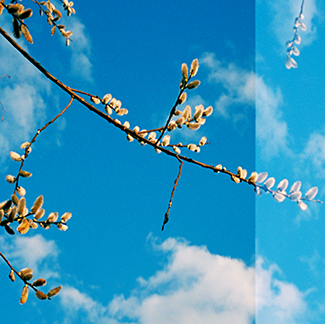
Spring Buds, Vermont. 2009 Crop 1

Print 2: Crop 4.5″ x 4.5″ of Full Size 9.5″ x 25″ Print

Spring Buds, Vermont. 2009 Crop 2

Print 3: Crop 4.5″ x 4.5″ of Extreme Full Size 19″ x 50″ Print!

Note:  The negative was scanned on an Imacon Scanner (wet mount) at 4725 optical dpi, 16 Bit… about a 500MB file. Film… Kodak Ektar 100.

Viva la Revolution-
Stephen

Want / need more information on the Leica 28mm Elmarit F2.8 ASPH… here is a link to a detailed review by Erwin Puts.

The New Kodak Ektar Film in 120 – A Quick Review

As promised here is a quick review of the new Kodak Ektar film in 120!

Full 120 Ektar Test Image

Click on image to see crop detail… full size image is 40″ x 40″, crop detail is a 4.5″ x 4.5″ section outlined in the above image as a white box. 

Technical Stuff… 

  • Camera: Rollei TLR “F”
  • Exposure: 1/60 at F11
  • Film: Kodak Ektar 120, EI 64 (Same as my test for the 35mm version.)
  • Scanned on an Imacon Scanner, dry.  I did my scan using a color setup I had created for the 35mm version of this film (scanner setting all balanced to a Macbeth Color Chart in direct sun) and found that it matched perfectly when opened in Photoshop.

 macbeth-color-checkerColor Chart Example. 

  • Photoshop adjustments limited to levels.
  • Full Size File: 600MB at 360 DPI which equals a 40″ x 40″ Print.
  • Cropped area equals a 4.5″ x 4.5″ section of the full 40″ x 40″ Print.

Conclusion… as with the 35mm version of this new film from Kodak it is hard to find something not to like… it scans quite easily, has great contrast and color, very fine grain with good sharpness. Again, I feel that it performs better in contrasty light at and EI of 64 than the box speed of 100 but that is just my opinion. Link to First Ektar Article here on FR.

ONE QUESTION… did you see the bent nail in the detail crop?… WOW!

Viva la Revolution-
Stephen

Buying Used Photographic Equipment

AudioBlog Logo

Buying used photographic gear can be a great way to save a few bucks and get that lens or camera body you’ve been dreaming of now. In this audioblog I outline a few suggestions to consider when buying used gear online or at a photographic store.

The artwork below was just made with my “used” Leica M7 and my “used” Leica 90mm Elmarit Lens.

leafearringsvermont2009springm7

Last Year’s Leaves, Vermont. 2009
From A New Eden
Leica M7 with 90mm Elmarit Lens
In Camera Overlapping Frame Panoramic Technique, 3X
Kodak Ektar Film
Printed 9.5″ x 25″ on Fabriano 640 gsm Rough, Hand Coated.
Copyright Stephen Schaub 2009

detailvermont09

Print surface detail, hand-coated Fabriano.