Yes, I finally broke down and purchased an iPhone… guess what… I love it! … My wife hates it!
I am going to post over the next few weeks some interesting options with regards to using the iPhone (mine is the 3gs) for imaging… I know you think I’m nuts but check out two quick shots below… 90% of the production was done using different in camera programs.
The first post will be in a day or two… I am presently testing different photo apps and post production requirements for each.
Yes, Mardi Gras is a bit over the top… but it is a spectacle that one has to see to believe. This quick video and snap shots were made with the help of my wife’s Kodak Easy Share camera and several shots of bourbon. (Bear in mind, all video and image were shot in the Garden District which is a far cry from the total insanity of the French Quarter…)
As for my actual artworks I will start processing film tomorrow- yes in Caffenol C!- and I will post examples soon.
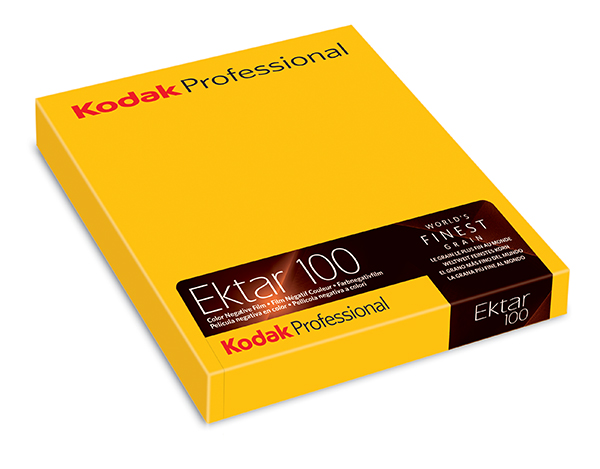
Here is some happy film news! Eastman Kodak has just announced this morning that the very popular color negative material Kodak Ektar film (C41 process) is now going to be offered in sheet film size for 4″ x 5″ and 8″ x 10″… these new sizes complement the already offered 35mm and 120 film sizes. I have written here on FR on the strengths of this film and think this is a very positive move on Kodak’s part. Now if I could just find a lab here in Vermont who still processes C41 sheet film I’d be all set…
Shooting is going really great and Mardi Gras is fun as usual. I’ve been coming to New Orleans now for 14 years and since Katrina this is the fist time things seem somewhat normal… Or at least normal for NO.
As I am putting my notes together to produce “The Photographers Coffee Break”, I decided to do a quick calculation on the actual cost for Caffenol C Developer as sourced from my local grocery store… $1.00 per roll if you use distilled water… .75¢ per roll if you use tap water… not bad at all!
I am leaving for New Orleans later today so for the next few days posts here on FR will come from my ipod Touch.
I’ve been using my little Pocket Spot Meter now for a few months and I really like it, except for when I am trying to read value next to another value with a huge different in brightness… think snow in the sun next to a deep shadow from a tree. The narrowness of the tree makes a perfect reading difficult if you follow the direction that came with the meter for normal operation (“hold the meter 12 inches from your eye and sight through the hole”)…
Today I came up with a better solution… just tip the meter up a bit and put more of the circle in the value you are trying to meter. Placing the 1 degree viewing sight exactly above or below the dividing line between to extremes values will result in a bad reading but doing what the photos below illustrate works perfect… note how in photo 2 the viewing hole is now somewhat elipical in nature… this is what you want. I checked this process out against my trusted Pentax Digital Spot Meter and my Sekonic L758DR Spot meter and in both cases all three meters were in agreement… yeah!
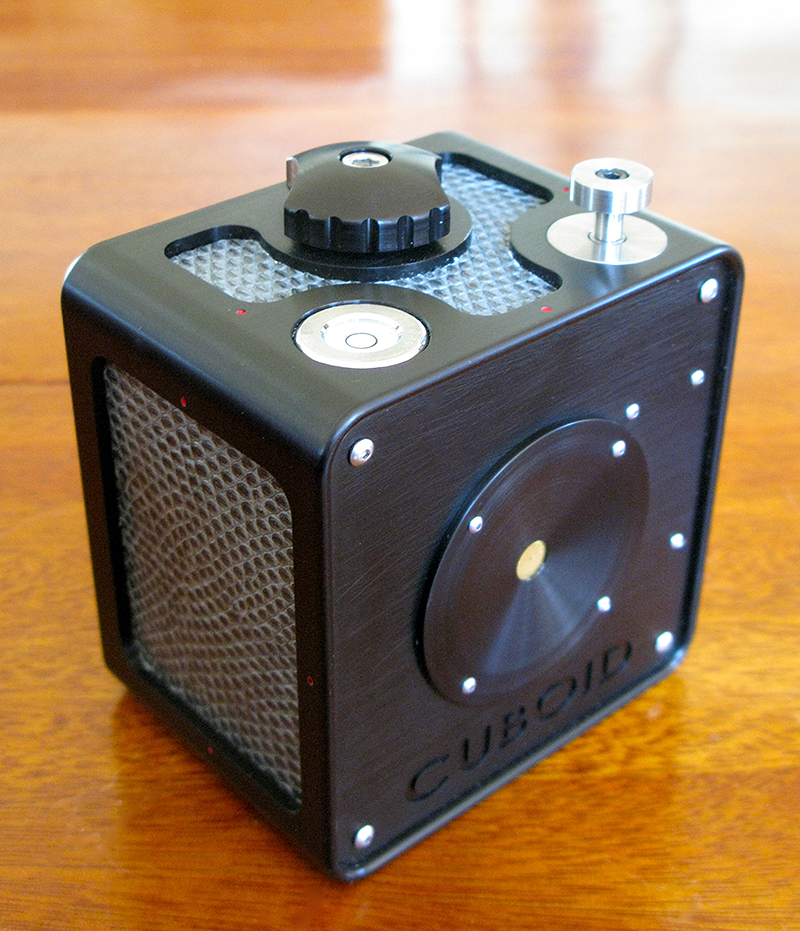
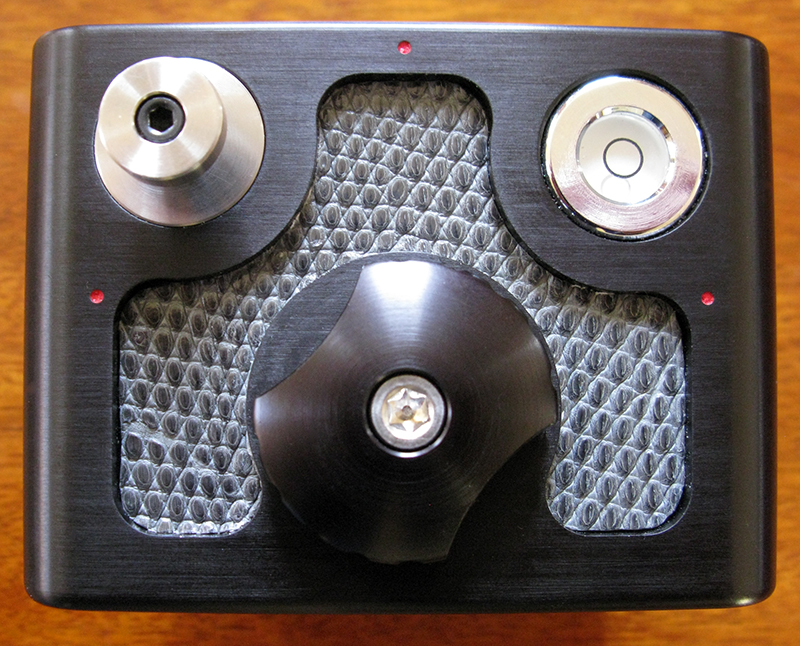
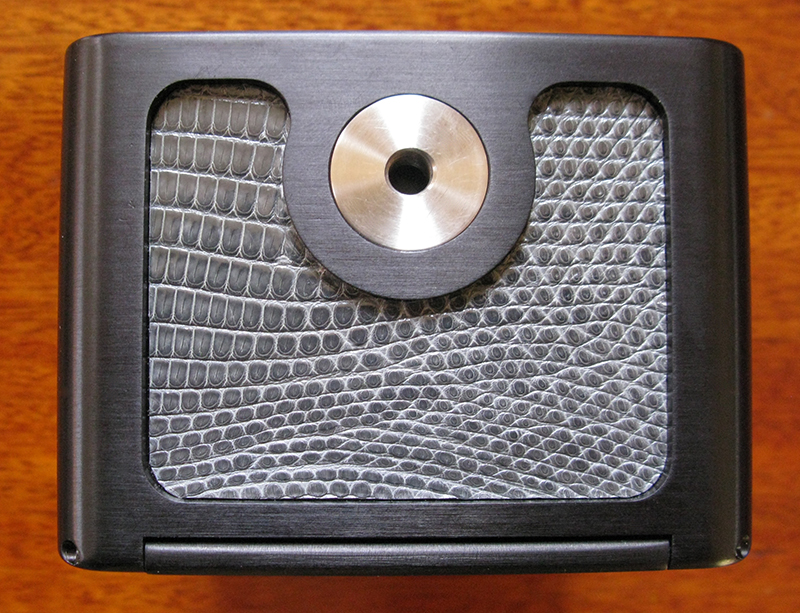
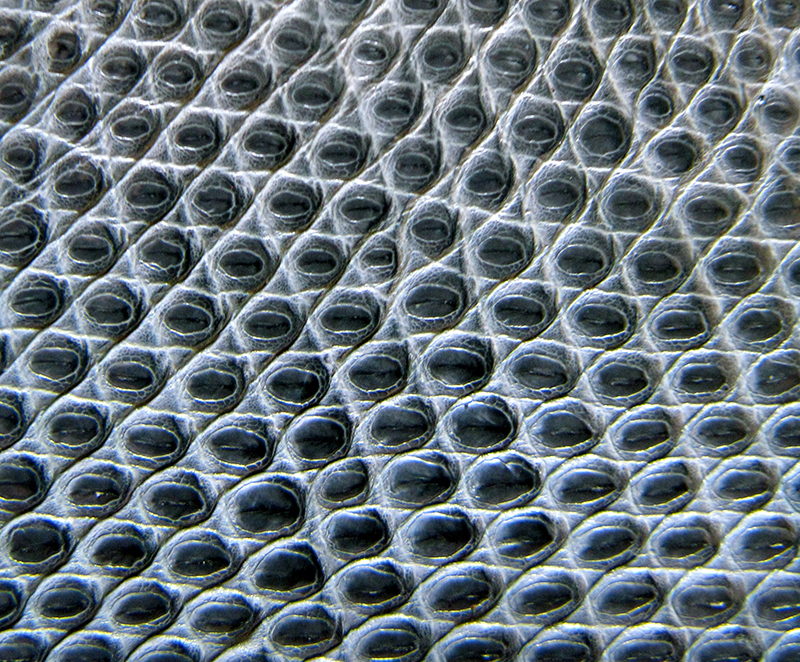
I’ve always been interested in the processes of resurrecting old cameras with new coverings… So when I discovered that www.cameraleather.com was here in Vermont and I had my new Cuboid camera just waiting for some luxurious material to cover its 4 sides I had to make the move. The Lizard skin I chose (yes!) is very durable, feels great and best of all helps keep this all-metal camera from getting too cold to hold in our Vermont climate…
Front View Cuboid Camera
Top View Cuboid Camera
Bottom View Cuboid Camera
Detail View Lizard Skin
The application process is very easy: the material has an adhesive backing and I found the detailed instructions provided on Camera Leather’s web site very helpful. The selection of materials available on their site is diverse and they offer coverings for many, many cameras… the Cuboid of course was a custom job.
One word of caution- Camera Leather is not flawless when it comes to returning phone messages, email questions, etc… so don’t hesitate in sending more than one email.
Am I glad to have it now though? Dude- check it out!
Viva la Revolution-
Stephen
For more information on the Cuboid Camera please visit: www.thecuboid.com
Elizabeth Gilbert is the author of the highly aclaimed book: Eat, Pray, Love. As a totally tortured artist myself, I found this video very interesting and thought provoking.
So what is TED?
TED is a small nonprofit devoted to Ideas Worth Spreading. It started out (in 1984) as a conference bringing together people from three worlds: Technology, Entertainment, Design. Since then its scope has become ever broader. Along with the annual TED Conference in Long Beach, California, and the TEDGlobal conference in Oxford UK, TED includes the award-winning TEDTalks video site, the Open Translation Program, the new TEDx community program, this year’s TEDIndia Conference and the annual TED Prize.
Here is an interesting side by side… shot within a few minutes of each other. The BW400CN is an EI of 200 (this film in my Caffenol C process has a very usable EI range from 50-800). The Fuji Acros is an EI of 100 (box speed… depending on processing time the Acros has a usable EI from 50-800). Both can go further in either direction but this range is the real sweet spot. The crops represent a 4″ x 4″ from a 20″ x 20″ image size… yes the BW400CN has more grain but it is much sharper and I am not sure the grain would even print at the 20″ x 20″ size. Both films have fantastic reciprocity characteristics with no adjustment required until 120 sec.
When you hover over the image it will give the description of the thumbnail.