I just couldn’t help myself…I needed to test yet another film in Diafine! What I have discovered has made me very, very happy. If you have been following the progression of articles here on The Figital Revolution I have been posting on Diafine Developer and an array of different black and white films for scanning purposes it should by now be clear by now that I feel that this is a great combo when ease of process, sharpness and huge tonality are required. Yes, there are finer grain developers but this finer grain comes at a cost, namely film speed which is something Diafine has no problem with!
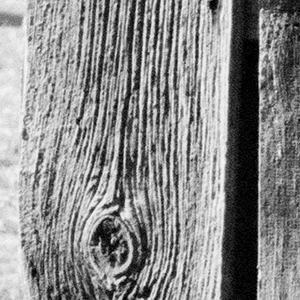
So here is what I have just found….Kodak 125PX in Diafine is a perfect match!!! I’ve never given 125PX much thought until I decided to try this test and the results have made me a convert. I love the look of the grain, it is REALLY sharp and has a beautiful tonal range with a working EI of 320-400. Marry 125PX with my other favorite “X” film TX (EI 1250-1600) and all bases for my needs are covered. Here are two sample pictures made recently on 125PX…the full size image is 16.5″ x 25″. (35mm negative, 6300 optical dpi wet mount scan.)


Please note that the second image was shot under very flat light and scanned at 3150 dpi.
Here is my processing Technique:
- Diafine Developer at 72-75 F
- Part A 3 minutes (two inversions every minute…gentle.)
- Part B 3 minutes (two inversions every minute…gentle.)
- Water Stop 1 minute Fill and Dump (72-75 F)
- Fix Kodak Rapid (5 minutes)
- Wash 1 minute running water (72-75 F)
- Perma Wash 1 minute constant agitation
- Wash 5 minutes (68-75 F)
- LFN
- Dry
The temperature for the Developer Part A and B is very important. I found that at 68-70 F my negs were a bit thin in the shadows and by increasing the temp just a few degrees (well within the usable range for Diafine of 70-85 F) everything fell right into place. I also now use this time and temp for TX as well – I often soup both films at the same time…very convenient! I no longer use a prewet for Diafine developer as over time it will dilute Part A to a point that could potentially cause problems.
So in conclusion… TX and 125PX are fantastic films and are now my personal films of choice for all of my black and white shooting. Every roll is run in Diafine as described above and the scans are easy and amazing! Give it a try you too may fall for the combo of “X” films and Diafine.
Final Note: I use in my workflow a bit of noise reduction on my images (Noise Ninja). These images are not at the default setting suggested by Noise Ninja but represent NN at about 1/4 strength.
Viva la Revolution!!

 Ever wonder where the articles and ideas for the articles on the Figital Revolution come from? Tired of your current process or working method and are looking for something new or a new approach. This audio blog provides high energy ideas on suggestions on how to jump start your creative process and redefine yourself as a photographer.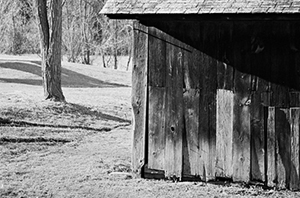


 Figital Revolution