
Links
art
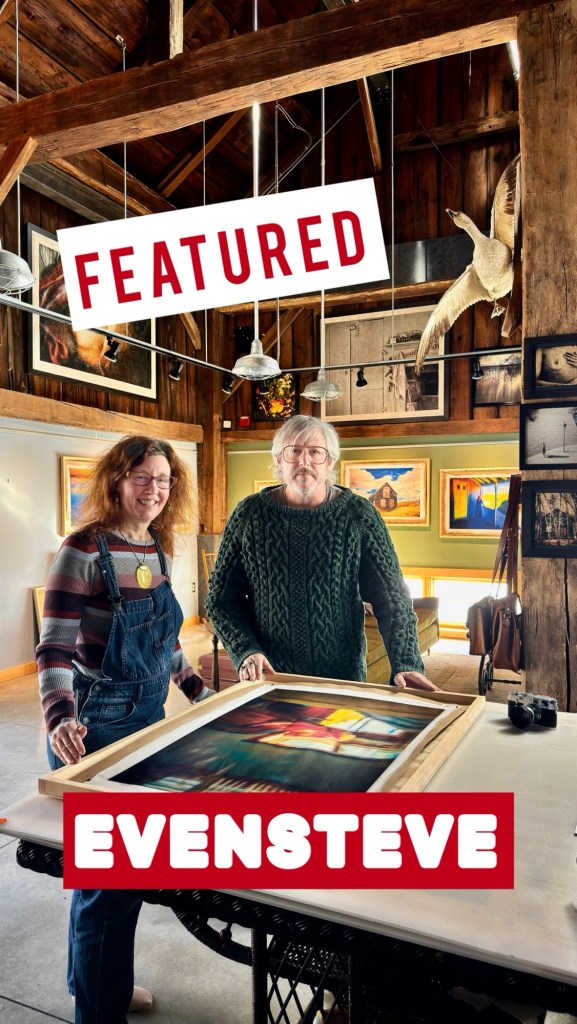
EveNSteve Featured Interview Tales of the Bittersweet
How to Promote Yourself as an Artist in 2025 (Print + Digital Tips)
Perceiving The World in a Deeply Human Way
Lately, I’ve been thinking a lot about the way we see—and how much information we actually need to perceive the world in a deeply human way. There’s a point at which resolution becomes not only unnecessary, but counterproductive. When we enter the realm of 4K, 8K, even 12K projections/ TV’s, something begins to feel off. The image is technically stunning, yes—but emotionally sterile. That hyper-clarity, like the hyper-smoothness of 60 or 120 frames per second (HFR) in video, may work for video games, but in cinema it often feels jarring, even unpleasant. It’s no accident that 24 frames per second still feels the most natural to our eyes—it has a rhythm that mirrors the way we actually experience motion.
Whenever I walk into a store and see the latest ultra-high-definition TVs, I’ll admit—I’m impressed for the first few seconds. But soon after, I find it overwhelming. There’s too much contrast, too much edge clarity, too much information bombarding my eyes. It stops being pleasurable. I find myself drawn instead to projection screens, where the light is reflected rather than emitted, or to older formats like 1080p, which feel more organic. In fact, we no longer even have a television in our home. When we did, I deliberately avoided buying a 4K set for precisely this reason—it just didn’t feel right.
This experience ties directly into how I think about photography. For years, the photo industry has been pushing the idea that “more megapixels equals better images.” But in my view, once you move beyond 18 or 24 megapixels—especially on full-frame 35mm sensors—the results often feel too sharp, too clinical. The images don’t feel better. They feel harsher, and in many cases, less human. That’s why I keep advocating for cameras with lower resolution—whether they’re small-sensor CCDs or large-sensor cameras like the Leica SL2-S, which tops out at 24 megapixels.
To my eye, the Leics SL2-S or the newer SL3-S produces images that feel far more filmic than, say, the 60-megapixel Leica M11-P. The latter may be technically superior, but the former feels better—more atmospheric, more alive. But again, I have to ask: in 2025, does “film-like” still matter? For those of us who lived and worked through the film era—who spent time in darkrooms, making prints by hand—it means something. But for younger photographers raised entirely in the digital realm, their visual reference point is different. The razor-sharp, hyper-detailed digital aesthetic may be what feels natural to them.
Still, I believe we’ve reached a kind of saturation point—a “peak resolution” moment. The photography industry, like many others, has long thrived on planned obsolescence. Resolution has been an easy metric to sell: higher numbers = better product. But I think that spell is finally breaking. You can see it in the analog resurgence: people are craving imperfection again. They’re seeking texture, atmosphere, and soul—qualities that can’t be measured in pixels.
After all, what has been one of the most beloved movements in the history of painting? Impressionism. Not because it rendered every detail with precision, but because it gave you just enough to feel something real—and let your heart and imagination do the rest. That’s what film, and lower-resolution analog mediums, do so beautifully. They don’t overwhelm you with data. They invite you into an experience. Not perfection—humanity.
The Crazy Story Of The First Photograph I Ever Sold — From The Marines To A Toledo Bookstore
CineStill Frames Features Stephen Schaub
Very excited to share this new documentary video on my artworks. Big thanks to CineStill Frames and Studio Skylight.
Viva la Revolution- Steve
Kodak Interview with Stephen Schaub
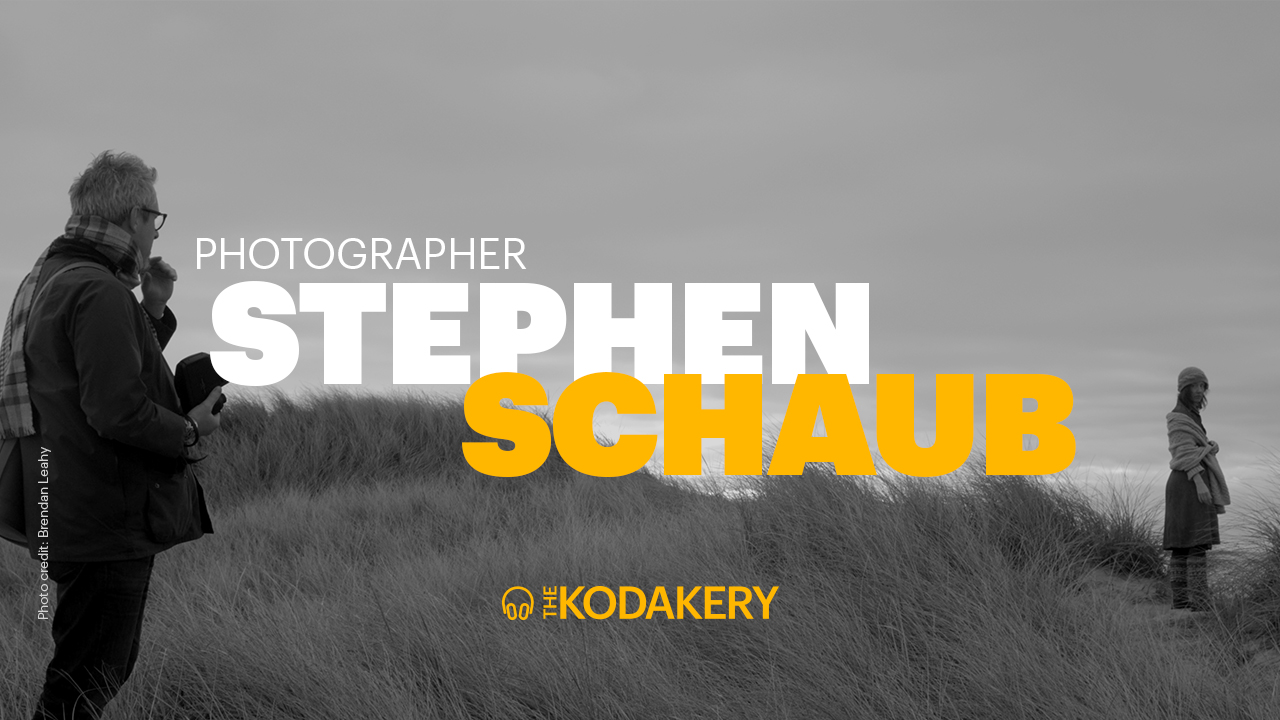
Very excited to announce an in-depth interview I did with Eastman Kodak for the Kodakery on my works, curating shows and just about everything FILM.
https://www.kodak.com/corp/podcast/podcastepisode/?contentid=4295013864
Viva la Revolution- Steve
John Berger Ways of Seeing Passes Away
So very sad… a huge influence on me… be sure to watch at least episode 1 as it is quite thought provoking and VERY relevant today.
John Berger- Ways of Seeing Part 1
Perhaps one of my favorite videos on art and the importance of how and where it is experienced. This is part one, the other parts are ok but this one from 1972 is a must watch for everyone in 2016!
Viva la Revolution- Steve
Figital Update
Welcome to the new layout for the Figital Revolution. Everything you’ve grown to love is still here and YES the ReEducation Videos are back with more to come very, very soon so stay tuned. Also, I just sent out the first FR newsletter (Viva La Revolution) so be sure to sign-up to get them delivered weekly (FREE and you can unsubscribe at any time). Please note that there is also an RSS feed to the newsletter archive…thanks for the suggestion!
 Figital Revolution